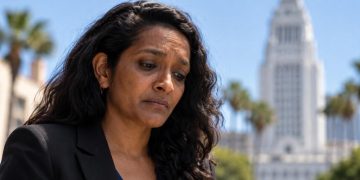


As New York City grapples with the tangible results of socialist governance, one Republican congressional candidate is sounding the alarm that Mayor Zohran Mamdani’s leadership is steering the metropolis toward fiscal and social ruin.
Caroline Shinkle, a corporate lawyer and Harvard Law graduate challenging for New York’s 12th Congressional District, argues that the Democratic socialist mayor’s policies on taxation, public safety, and economic regulation represent not mere incompetence, but a deliberate path of destruction.
Shinkle’s critique cuts to the core of a broader national conversation: whether cities can survive when progressive ideologies prioritize redistribution over growth, and identity over order. In Manhattan’s deep-blue enclave, where common sense once built a global capital, residents now face sky-high living costs, business flight, and persistent safety concerns that no amount of rhetoric can obscure.
The patterns emerging in Mamdani’s New York echo failures seen in other left-governed urban centers, where “tax the rich” campaigns rarely deliver promised equity and instead erode the tax base they claim to expand.
The Human Cost of Ideological Governance
Shinkle pulls no punches in her assessment. “Mamdani does not represent where voters in my district are on the issues,” she told Fox News. “He’s really gone from incompetence to active destruction.” Her observations align with reports of major financial institutions reconsidering their footprints in the city, as rhetoric targeting successful entrepreneurs creates an unwelcoming environment for enterprise.
This dynamic exposes a central contradiction in progressive urban policy: the insistence that punishing success will somehow uplift the masses. Instead, it accelerates the very inequality it purports to solve, as productive citizens and businesses seek refuge in jurisdictions that reward rather than demonize achievement. New York, long a beacon of opportunity, now risks becoming a cautionary tale of what happens when envy supplants economics.
Shinkle, a MIT and Harvard Law alum running to replace retiring Rep. Jerry Nadler, frames her campaign around restoring “common sense” principles. These include pro-growth strategies that recognize the dignity of work and the necessity of safe, functional public spaces. Her message resonates beyond traditional Republican circles, tapping into widespread frustration with policies that have sent costs soaring while eroding quality of life.
Crime, Costs, and the Erosion of Urban Life
Beyond taxation, Shinkle highlights public safety as a non-negotiable foundation for any thriving city. New Yorkers, she notes, deserve to navigate subways and streets without constant vigilance. This concern strikes at the heart of governance: the primary duty of civil authority is to secure the blessings of liberty, not experiment with novel theories of policing that prioritize ideology over results.
The cost-of-living crisis compounds these issues. When rents, regulations, and taxes combine to make basic existence precarious, the social fabric frays. Families delay or forgo children, businesses relocate, and the vibrant street life that defines New York diminishes. Mamdani’s vision of city-run stores and expansive entitlements, however well-intentioned in rhetoric, collides with fiscal reality and human nature’s response to disincentives.
Republicans like Shinkle see an opening not merely for partisan gain but for a philosophical reset. In a district long dominated by one party, her candidacy tests whether voters recognize the connection between progressive experiments and observable decline. The stakes extend far beyond one congressional seat; they touch on the viability of America’s greatest cities under current ideological trends.
Principles That Built—and Can Restore—New York
Shinkle’s emphasis on pro-business, pro-worker policies stands in stark contrast to the redistributionist model. History demonstrates that cities flourish when they harness individual initiative rather than constrain it through punitive measures. Constitutional wisdom reminds us that governments exist to protect rights, including property rights essential to prosperity.
Yet the left’s approach often inverts this order, treating wealth creators as obstacles rather than engines of communal benefit. The irony abounds: policies sold as compassionate end up burdening the very working families they claim to champion, as higher costs filter down and opportunities evaporate.

As New Yorkers assess their path forward, the choice clarifies between continuation of decline and a return to fundamentals. Shinkle’s uphill battle in NY-12 underscores a truth larger than any single race: ideas have consequences, and governance by fantasy exacts a heavy toll.
In the midst of these challenges, one is reminded of the ancient call to justice and righteousness in leadership. “Thus saith the LORD; Execute ye judgment and righteousness, and deliver the spoiled out of the hand of the oppressor: and do no wrong, do no violence to the stranger, the fatherless, nor the widow, neither shed innocent blood in this place,” Jeremiah 22:3 reminds us of the enduring standard by which cities and nations are measured.
The coming months will reveal whether enough New Yorkers, across party lines, recognize the urgency of course correction before the ground gives way entirely.
Starting the Day With a Scripture-Inspired Roast Helps Center Your Thoughts on Eternal Truths Amid Temporal Pressures
The world can seem chaotic, especially right after we wake up. Many believers start their mornings reaching for something familiar — a hot cup of coffee — yet end up settling for mediocre brews that do little more than deliver a caffeine jolt. The daily grind of life, with its endless distractions, news cycles, and responsibilities, can leave even the most faithful feeling spiritually parched alongside their physical fatigue. What if your morning ritual could do more than wake you up? What if it could ground you in truth, nourish your body with exceptional quality, and quietly advance a kingdom purpose at the same time?
That’s the promise — and the reality — behind Promised Grounds Coffee. This Christian-founded company doesn’t just roast beans; it approaches every step as an act of worship and discipleship. By selecting only the top 10% of specialty-grade beans, ethically sourced from dedicated farmers in Central and South America, and small-batch roasting them with reverence in Austin, Texas, Promised Grounds delivers what many describe as the best coffee available — never burnt, never bland, but rich with origin stories and layered flavors that honor God’s creation.
From the vibrant Psalm 27 Roast (a light, bright medium option) to the bold yet peaceful 2 Timothy 1:7 Decaf, each bag carries a Scripture verse that turns your daily pour into a gentle reminder of faith. And through their Ounce Per Ounce Promise, every ounce of coffee you enjoy provides an equal ounce of clean water to families in need via partnership with Filter of Hope — literally brewing hope for body and soul, one cup at a time.
The challenge for today’s Christians runs deeper than finding a decent cup. In an age of convenience-driven consumerism, it’s easy to support companies that dilute values or remain silent on matters of faith. Many believers want their everyday choices — from what they drink to how they spend — to reflect discipleship rather than just convenience. Promised Grounds solves this by weaving Christian excellence into the entire process: beans nurtured with prayerful stewardship by farming families, roasted as an offering rather than a commodity, and packaged with Bible verses to encourage a mindset of gratitude and purpose from the first sip. Reviewers consistently praise the smooth, rich profiles — whether enjoyed black in a drip maker, iced on a warm day, or shared in fellowship — noting how the quality stands toe-to-toe with premium secular brands while delivering something far more meaningful.
This integration of faith and flavor addresses a real need in Christian households and ministries. Busy parents, church leaders, and remote workers alike report that starting the day with a Scripture-inspired roast helps center their thoughts on eternal truths amid temporal pressures. The coffee’s exceptional character — bright citrus notes in lighter roasts or deep chocolate undertones in bolder ones — comes from meticulous selection and careful roasting that respects the bean’s natural gifts rather than masking them. It’s the kind of coffee that elevates a simple quiet time, fuels productive workdays, or sparks meaningful conversations when shared at Bible studies or outreach events. And because it’s ethically sourced with integrity, every purchase supports sustainable livelihoods for farmers who treat their crops like family harvests.
For those leading churches or small groups, the impact multiplies. Promised Grounds offers bundles and options perfect for hospitality ministries, turning ordinary coffee service into an opportunity to point people toward the living water of Christ. Imagine greeting visitors with a warm cup whose very bag carries God’s Word — a subtle yet powerful witness that aligns with the Great Commission. The company’s Texas roots and commitment to “brewing hope” resonate especially with believers who value American enterprise paired with global compassion.
Of course, quality alone isn’t enough if the experience feels out of reach. Promised Grounds keeps it accessible with practical perks like free shipping on orders over $40, sample sets for discovering favorites, and thoughtful add-ons such as faith-themed mugs. Whether you prefer whole beans for fresh grinding, grounds for convenience, or even bulk options for larger households and ministries, the result is consistently superior coffee that makes discipleship feel integrated rather than added on.
As you consider how to align even the smallest habits with your walk with God, Promised Grounds Coffee stands out as a refreshing solution. It tackles the dual problems of subpar daily sustenance and disconnected consumption by offering a product that genuinely excels in taste while advancing a mission of clean water, farmer dignity, and scriptural encouragement. Believers who make the switch often describe it as more than a beverage upgrade — it becomes part of their rhythm of gratitude, a daily invitation to remember that every good gift comes from above.
If you’re ready to transform your mornings (and perhaps your church gatherings) with coffee that honors both exceptional craftsmanship and Christian values, I encourage you to explore what Promised Grounds has to offer. One sip at a time, you’ll be nourishing your body, refreshing your spirit, and participating in something far greater — all while enjoying what truly is among the best coffee available.