

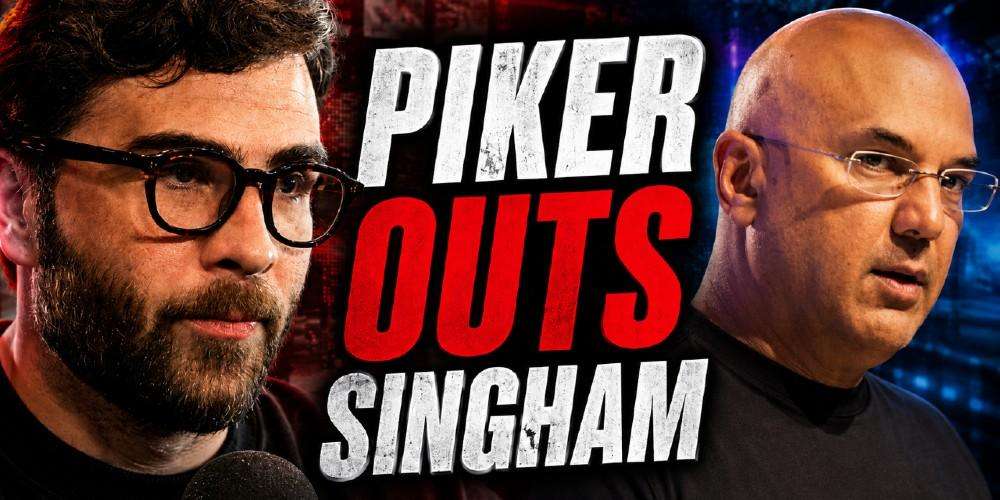
In a remarkable moment of candor during a lengthy livestream, prominent socialist streamer Hasan Piker pulled back the curtain on a network of political activism that critics have long suspected operates as a vehicle for foreign influence. Piker named American tech tycoon Neville Roy Singham, now based in Shanghai, as a key financier behind numerous “political movements” in the United States, even as the organizations he supports maintain the facade of tax-exempt nonprofits.
This admission arrives amid federal scrutiny, raising serious questions about whether American tax laws are being weaponized against the nation’s interests by those who openly admire adversarial regimes.
- Hasan Piker identified Neville Roy Singham as the funding source for groups like CodePink, ANSWER Coalition, and Party for Socialism and Liberation during a livestream responding to federal subpoenas.
- Singham, who sold his company for hundreds of millions and relocated to China, has funneled approximately $278-285 million into a network of nonprofits promoting pro-CCP narratives and anti-American protests.
- These organizations have coordinated major street actions against U.S. policy, often aligning with interests of China, Iran, and other adversaries.
- Congressional committees are investigating potential violations of nonprofit rules limiting political activity and concerns over foreign influence.
- Piker’s comments mark a rare public acknowledgment from within the network that Singham’s money drives explicit political advocacy rather than neutral charity.
- The episode highlights growing scrutiny of dark money networks exploiting U.S. tax status while advancing agendas hostile to American sovereignty.
Piker’s revelation did not come in a vacuum. Federal investigators have subpoenaed him and CodePink co-founder Medea Benjamin over a trip to Cuba that allegedly skirted sanctions. In defending himself, Piker pivoted to Singham, describing the billionaire as a “funding vehicle” for activism that federal authorities supposedly seek to suppress. The irony is thick: a self-proclaimed opponent of billionaires casually revealing dependence on one who operates from the heart of the Chinese Communist Party’s sphere.
Singham’s journey from American tech executive to Shanghai resident tells its own story. After selling Thoughtworks for an estimated $785 million, he directed vast resources into entities like The People’s Forum, which has received over $20 million, alongside millions more to CodePink and other groups. These organizations share leadership, office space, and ideology, often mobilizing protests that echo Beijing’s talking points on global affairs. Reports indicate Singham has praised Xi Jinping’s vision for a “new world order” at CCP-endorsed events, positioning himself as something of a modern ideological operative.
The network’s activities extend far beyond traditional charity. From anti-Israel demonstrations to actions supporting regimes in Tehran and Havana, Singham-backed groups have played central roles in disruptive street theater that divides Americans and weakens resolve against external threats. Congressional probes by committees including Ways and Means have highlighted how these outfits enjoy tax benefits while engaging in overt political operations, potentially crossing legal lines designed to prevent abuse of the nonprofit system.
What makes this case particularly troubling is the selective blindness of the political left. For years, progressive voices have railed against “dark money” in politics, yet here stands a billionaire whose fortune flows into causes that align suspiciously well with America’s chief geopolitical rival. The same influencers who decry corporate influence in Washington appear remarkably comfortable when the dollars arrive from a Mao-admiring donor in Shanghai. This contradiction exposes not mere hypocrisy, but a deeper ideological alignment that prioritizes revolutionary upheaval over national loyalty.
Critics rightly ask whether such funding truly represents independent American activism or serves as an extension of United Front work by the CCP. Multiple investigations, including those by the New York Times, have traced Singham’s close coordination with Chinese state media and propaganda efforts. His marriage to CodePink co-founder Jodie Evans further cemented ties between personal wealth and activist infrastructure. The result is a sophisticated apparatus capable of rapid response to geopolitical events, often in ways that undermine U.S. foreign policy.
This episode should prompt broader reflection on how foreign adversaries exploit America’s open society. Nonprofits were never intended as shields for political warfare directed from abroad. As federal investigators follow the money, the public deserves transparency about whether Singham’s network complies with laws governing foreign agents and charitable activity. The stakes involve nothing less than the integrity of American civil society against coordinated external subversion.

History offers stern warnings about allowing ideological zeal to blind us to threats from within. When Jesus warned His disciples in Matthew 7:15, “Beware of false prophets, which come to you in sheep’s clothing, but inwardly they are ravening wolves,” He spoke to the danger of deceptive appearances masking destructive intent. Today’s nonprofit veneers demand similar discernment from citizens and lawmakers alike.
The left’s entanglement with Singham’s resources reveals a movement more committed to abstract global revolution than to the concrete blessings of American liberty. As probes continue, one hopes they will not only uncover financial trails but also reaffirm the principle that no foreign power, however cleverly disguised, should purchase influence over our domestic discourse through tax-advantaged shells. True reform would protect genuine charity while closing loopholes that enable such sophisticated operations against the republic.
Starting the Day With a Scripture-Inspired Roast Helps Center Your Thoughts on Eternal Truths Amid Temporal Pressures
The world can seem chaotic, especially right after we wake up. Many believers start their mornings reaching for something familiar — a hot cup of coffee — yet end up settling for mediocre brews that do little more than deliver a caffeine jolt. The daily grind of life, with its endless distractions, news cycles, and responsibilities, can leave even the most faithful feeling spiritually parched alongside their physical fatigue. What if your morning ritual could do more than wake you up? What if it could ground you in truth, nourish your body with exceptional quality, and quietly advance a kingdom purpose at the same time?
That’s the promise — and the reality — behind Promised Grounds Coffee. This Christian-founded company doesn’t just roast beans; it approaches every step as an act of worship and discipleship. By selecting only the top 10% of specialty-grade beans, ethically sourced from dedicated farmers in Central and South America, and small-batch roasting them with reverence in Austin, Texas, Promised Grounds delivers what many describe as the best coffee available — never burnt, never bland, but rich with origin stories and layered flavors that honor God’s creation.
From the vibrant Psalm 27 Roast (a light, bright medium option) to the bold yet peaceful 2 Timothy 1:7 Decaf, each bag carries a Scripture verse that turns your daily pour into a gentle reminder of faith. And through their Ounce Per Ounce Promise, every ounce of coffee you enjoy provides an equal ounce of clean water to families in need via partnership with Filter of Hope — literally brewing hope for body and soul, one cup at a time.
The challenge for today’s Christians runs deeper than finding a decent cup. In an age of convenience-driven consumerism, it’s easy to support companies that dilute values or remain silent on matters of faith. Many believers want their everyday choices — from what they drink to how they spend — to reflect discipleship rather than just convenience. Promised Grounds solves this by weaving Christian excellence into the entire process: beans nurtured with prayerful stewardship by farming families, roasted as an offering rather than a commodity, and packaged with Bible verses to encourage a mindset of gratitude and purpose from the first sip. Reviewers consistently praise the smooth, rich profiles — whether enjoyed black in a drip maker, iced on a warm day, or shared in fellowship — noting how the quality stands toe-to-toe with premium secular brands while delivering something far more meaningful.
This integration of faith and flavor addresses a real need in Christian households and ministries. Busy parents, church leaders, and remote workers alike report that starting the day with a Scripture-inspired roast helps center their thoughts on eternal truths amid temporal pressures. The coffee’s exceptional character — bright citrus notes in lighter roasts or deep chocolate undertones in bolder ones — comes from meticulous selection and careful roasting that respects the bean’s natural gifts rather than masking them. It’s the kind of coffee that elevates a simple quiet time, fuels productive workdays, or sparks meaningful conversations when shared at Bible studies or outreach events. And because it’s ethically sourced with integrity, every purchase supports sustainable livelihoods for farmers who treat their crops like family harvests.
For those leading churches or small groups, the impact multiplies. Promised Grounds offers bundles and options perfect for hospitality ministries, turning ordinary coffee service into an opportunity to point people toward the living water of Christ. Imagine greeting visitors with a warm cup whose very bag carries God’s Word — a subtle yet powerful witness that aligns with the Great Commission. The company’s Texas roots and commitment to “brewing hope” resonate especially with believers who value American enterprise paired with global compassion.
Of course, quality alone isn’t enough if the experience feels out of reach. Promised Grounds keeps it accessible with practical perks like free shipping on orders over $40, sample sets for discovering favorites, and thoughtful add-ons such as faith-themed mugs. Whether you prefer whole beans for fresh grinding, grounds for convenience, or even bulk options for larger households and ministries, the result is consistently superior coffee that makes discipleship feel integrated rather than added on.
As you consider how to align even the smallest habits with your walk with God, Promised Grounds Coffee stands out as a refreshing solution. It tackles the dual problems of subpar daily sustenance and disconnected consumption by offering a product that genuinely excels in taste while advancing a mission of clean water, farmer dignity, and scriptural encouragement. Believers who make the switch often describe it as more than a beverage upgrade — it becomes part of their rhythm of gratitude, a daily invitation to remember that every good gift comes from above.
If you’re ready to transform your mornings (and perhaps your church gatherings) with coffee that honors both exceptional craftsmanship and Christian values, I encourage you to explore what Promised Grounds has to offer. One sip at a time, you’ll be nourishing your body, refreshing your spirit, and participating in something far greater — all while enjoying what truly is among the best coffee available.