

In the quiet suburbs east of Los Angeles, homeowners in San Dimas are confronting a disturbing new reality. Burglars are not merely breaking in—they are methodically watching first.
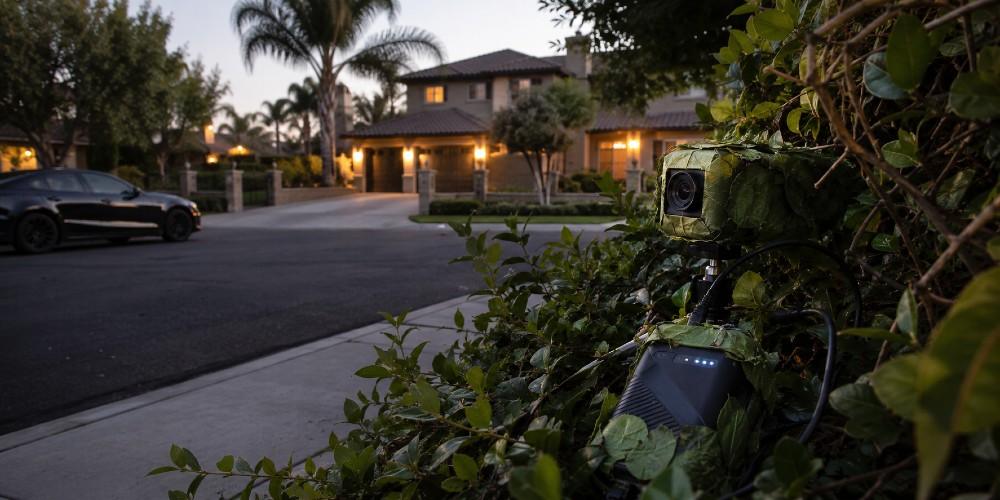
Los Angeles County Sheriff’s deputies recently discovered sophisticated hidden cameras planted in bushes and hedges, devices designed to record daily routines and pinpoint the perfect moment for invasion. This is no random vandalism. It represents a calculated escalation in property crime that exposes the failures of soft-on-crime policies and eroded community vigilance.
Authorities responded to a burglary on the 800 block of Via Gregorio this week and uncovered a camera concealed in landscaping across from the victim’s home. The setup included a portable hotspot and external battery pack, allowing real-time remote monitoring.
Just days earlier, a landscaper trimming hedges in the same neighborhood found another device: a cellular phone wrapped in camouflage tape, adorned with artificial plants, and powered by a bank. Both point to organized thieves treating upscale homes like prey in a high-tech hunt.
This tactic is not new, but its spread in San Dimas underscores a troubling pattern. Criminals, emboldened by revolving-door justice and sanctuary policies that prioritize offenders over victims, now deploy consumer-grade technology against law-abiding citizens.
While officials issue polite warnings to “check your bushes,” the real question lingers: Why must families in once-safe neighborhoods bear the burden of defending their own property against predators who face minimal consequences?
California’s experiment with reduced penalties for theft and property crimes has produced predictable results. When smash-and-grab raids go unpunished and repeat offenders cycle through the system, innovation in criminal enterprise follows. Burglars have upgraded from crude crowbars to wireless surveillance, turning suburban streets into observation posts. San Dimas residents, many in family-oriented communities, now scan their own flower beds with the wariness once reserved for urban alleys.
Deputies emphasize that these cameras blend seamlessly—tucked in planters, trees, or beds—to study when owners leave, what they own, and when homes sit empty. Photos released show the crude yet effective disguises: green tape, fake vines, and battery packs. The message from law enforcement is clear: vigilance falls to the homeowner because systemic trust has eroded.

Yet this story reaches beyond gadgets and greenery. It reflects a culture that has devalued the right to secure one’s home. Families build lives in places like San Dimas expecting the basic protections promised under law and custom. When that promise falters, trust in institutions crumbles.
Neighbors become suspicious of strangers, and routine yard work turns into a security sweep. The irony stings: progressive ideals that weakened policing have left citizens to play amateur detective in their own backyards.
History offers perspective. From ancient walls to frontier stockades, societies have always recognized the home as a sanctuary worth defending. In an age of technological predation, that refuge demands both spiritual reliance and practical resolve.
Residents should heed the sheriff’s advice: inspect landscaping regularly, maintain clear sightlines, light outdoor areas, and report anomalies promptly. But lasting solutions require more than personal precautions. Communities must demand accountability—stricter sentencing, proactive policing, and rejection of policies that treat property crime as a minor inconvenience. Until leaders prioritize safety over ideology, hidden cameras in the shrubs will remain a symptom of deeper disorder.

The families of San Dimas deserve better than becoming unwilling subjects in a burglar’s livestream. Their vigilance today may protect tomorrow’s peace, but it also stands as a rebuke to those who let order slip away. In defending their homes, they defend something far greater: the ordered liberty that once defined American neighborhoods.
Starting the Day With a Scripture-Inspired Roast Helps Center Your Thoughts on Eternal Truths Amid Temporal Pressures
The world can seem chaotic, especially right after we wake up. Many believers start their mornings reaching for something familiar — a hot cup of coffee — yet end up settling for mediocre brews that do little more than deliver a caffeine jolt. The daily grind of life, with its endless distractions, news cycles, and responsibilities, can leave even the most faithful feeling spiritually parched alongside their physical fatigue. What if your morning ritual could do more than wake you up? What if it could ground you in truth, nourish your body with exceptional quality, and quietly advance a kingdom purpose at the same time?
That’s the promise — and the reality — behind Promised Grounds Coffee. This Christian-founded company doesn’t just roast beans; it approaches every step as an act of worship and discipleship. By selecting only the top 10% of specialty-grade beans, ethically sourced from dedicated farmers in Central and South America, and small-batch roasting them with reverence in Austin, Texas, Promised Grounds delivers what many describe as the best coffee available — never burnt, never bland, but rich with origin stories and layered flavors that honor God’s creation.
From the vibrant Psalm 27 Roast (a light, bright medium option) to the bold yet peaceful 2 Timothy 1:7 Decaf, each bag carries a Scripture verse that turns your daily pour into a gentle reminder of faith. And through their Ounce Per Ounce Promise, every ounce of coffee you enjoy provides an equal ounce of clean water to families in need via partnership with Filter of Hope — literally brewing hope for body and soul, one cup at a time.
The challenge for today’s Christians runs deeper than finding a decent cup. In an age of convenience-driven consumerism, it’s easy to support companies that dilute values or remain silent on matters of faith. Many believers want their everyday choices — from what they drink to how they spend — to reflect discipleship rather than just convenience. Promised Grounds solves this by weaving Christian excellence into the entire process: beans nurtured with prayerful stewardship by farming families, roasted as an offering rather than a commodity, and packaged with Bible verses to encourage a mindset of gratitude and purpose from the first sip. Reviewers consistently praise the smooth, rich profiles — whether enjoyed black in a drip maker, iced on a warm day, or shared in fellowship — noting how the quality stands toe-to-toe with premium secular brands while delivering something far more meaningful.
This integration of faith and flavor addresses a real need in Christian households and ministries. Busy parents, church leaders, and remote workers alike report that starting the day with a Scripture-inspired roast helps center their thoughts on eternal truths amid temporal pressures. The coffee’s exceptional character — bright citrus notes in lighter roasts or deep chocolate undertones in bolder ones — comes from meticulous selection and careful roasting that respects the bean’s natural gifts rather than masking them. It’s the kind of coffee that elevates a simple quiet time, fuels productive workdays, or sparks meaningful conversations when shared at Bible studies or outreach events. And because it’s ethically sourced with integrity, every purchase supports sustainable livelihoods for farmers who treat their crops like family harvests.
For those leading churches or small groups, the impact multiplies. Promised Grounds offers bundles and options perfect for hospitality ministries, turning ordinary coffee service into an opportunity to point people toward the living water of Christ. Imagine greeting visitors with a warm cup whose very bag carries God’s Word — a subtle yet powerful witness that aligns with the Great Commission. The company’s Texas roots and commitment to “brewing hope” resonate especially with believers who value American enterprise paired with global compassion.
Of course, quality alone isn’t enough if the experience feels out of reach. Promised Grounds keeps it accessible with practical perks like free shipping on orders over $40, sample sets for discovering favorites, and thoughtful add-ons such as faith-themed mugs. Whether you prefer whole beans for fresh grinding, grounds for convenience, or even bulk options for larger households and ministries, the result is consistently superior coffee that makes discipleship feel integrated rather than added on.
As you consider how to align even the smallest habits with your walk with God, Promised Grounds Coffee stands out as a refreshing solution. It tackles the dual problems of subpar daily sustenance and disconnected consumption by offering a product that genuinely excels in taste while advancing a mission of clean water, farmer dignity, and scriptural encouragement. Believers who make the switch often describe it as more than a beverage upgrade — it becomes part of their rhythm of gratitude, a daily invitation to remember that every good gift comes from above.
If you’re ready to transform your mornings (and perhaps your church gatherings) with coffee that honors both exceptional craftsmanship and Christian values, I encourage you to explore what Promised Grounds has to offer. One sip at a time, you’ll be nourishing your body, refreshing your spirit, and participating in something far greater — all while enjoying what truly is among the best coffee available.