

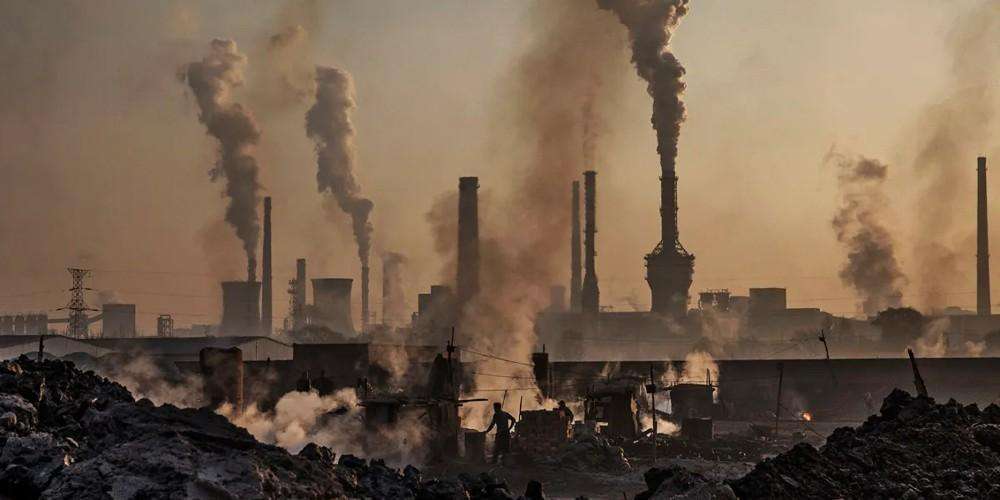
 (DCNF)—Since the approval of the Paris Climate Agreement in 2015 by every nation on earth except the United States, the ever-compliant global media has flooded newsprint, airwaves and digital space with narratives that China is moving away from coal. We have been assured by tens of thousands of scholarly, peer-reviewed “studies” that the communist government there is rapidly displacing its gigantic fleet of coal power plants — bigger than the rest of the word’s combined — with glorious solar panels and windmills and battery arrays so enormous they’d cover Taylor Sheridan’s 6666 Ranch in the Texas panhandle.
It all makes for a glorious narrative, one heavily encouraged by Xi Jinping’s government in its ceaseless drive for acceptance by the global community and accumulation of geopolitical and hegemonic leverage. The narrative has gained such a high level of acceptance that China is invariably treated at the annual COP and World Economic Forum events as a full participant in the impossible globalist drive for Net Zero by 2050 even though its own nebulous commitments do not even begin to kick in until 2060 and beyond. In the meantime, China continues to expand its coal power fleet and ramp up its mining operations every year, a fact which seems to always be “unexpected” by the media’s preferred “experts” on such things.
Just one problem: It’s all a myth. In a recent analysis, Canadian energy analyst Dr. Joseph Fournier details the realty, which is that the Xi government remains as wedded to coal as former British prince Harry remains wedded to former Netflix star Meghan Markle. Fournier points out the fact that Chinese policymakers framed coal as “the sea-calming divine needle (a reference to the mythical magic staff of Sun WuKong) or ballast stone of national energy security” in the country’s 14th Five-Year Energy plan published in 2020. That framing continues to shape the 15th Five-Year plan published earlier this month, in which authors reaffirm coal’s role as the country’s “foundational” energy source.
This year’s planning report does emphasize “clean and efficient utilization” of coal, as well as “promoting the peaking” of its use, but stops short of specifying the year in which said glorious “peak” might happen or how many years the period of phasing it all down will take. Why play such word games? Because again, it’s all a grand game.
Not that the Chinese haven’t invested massively in wind and solar – they certainly have, so much so that the country’s “renewable” sector contributed as much as 10% to China’s gross domestic product in 2024. Of course, the troublesome reality there is that those wind, solar and battery installations and exports were manufactured in factories powered by coal, fed by raw metals mined by diesel-powered heavy equipment, realities the World Economic Forum (WEF), the United Nations (UN) and their media cheerleaders prefer to ignore.
They’ve built so much of the stuff in fact that this year has seen record levels of curtailment of these weather-reliant energy sources. An estimated 360 terawatt hours of wind and solar went wasted during the first half of 2026 alone, a near-50% year-over-year increase.
The latest Five-Year Plan goes on to call for strengthening coal’s regulatory function within a “new-type power system,” concentrating production in northern security bases, modernizing mines to reduce emissions and pollution and diversifying some coal enterprises into chemicals and other industrial businesses. It also emphasizes methane controls and efficiency upgrades for existing plants but predictably makes no mention of hard consumption caps or rapid retirement schedules.
So, should we really expect China, a nation with transparent designs on global domination, to just voluntarily surrender its Divine Needle to gain praise from climate alarm prophets of the global order? Don’t be silly.
That brings us to another troublesome reality which Dr. Fournier describes: The fact that, at current consumption levels, China’s domestic coal supplies will be essentially depleted over the next 30 years or so. In his report, Fournier says the evidence at hand “does not describe a nation merely hedging against uncertainty. It describes a state systematically preparing for regional war and coercive resource acquisition.”
After all, energy security is in fact inseparable from national security. Why would any rational person expect China to voluntarily give up on protecting that?
David Blackmon is an energy writer and consultant based in Texas. He spent 40 years in the oil and gas business, where he specialized in public policy and communications.
The views and opinions expressed in this commentary are those of the author and do not reflect the official position of the Daily Caller News Foundation.

All content created by the Daily Caller News Foundation, an independent and nonpartisan newswire service, is available without charge to any legitimate news publisher that can provide a large audience. All republished articles must include our logo, our reporter’s byline and their DCNF affiliation. For any questions about our guidelines or partnering with us, please contact [email protected].
Starting the Day With a Scripture-Inspired Roast Helps Center Your Thoughts on Eternal Truths Amid Temporal Pressures
The world can seem chaotic, especially right after we wake up. Many believers start their mornings reaching for something familiar — a hot cup of coffee — yet end up settling for mediocre brews that do little more than deliver a caffeine jolt. The daily grind of life, with its endless distractions, news cycles, and responsibilities, can leave even the most faithful feeling spiritually parched alongside their physical fatigue. What if your morning ritual could do more than wake you up? What if it could ground you in truth, nourish your body with exceptional quality, and quietly advance a kingdom purpose at the same time?
That’s the promise — and the reality — behind Promised Grounds Coffee. This Christian-founded company doesn’t just roast beans; it approaches every step as an act of worship and discipleship. By selecting only the top 10% of specialty-grade beans, ethically sourced from dedicated farmers in Central and South America, and small-batch roasting them with reverence in Austin, Texas, Promised Grounds delivers what many describe as the best coffee available — never burnt, never bland, but rich with origin stories and layered flavors that honor God’s creation.
From the vibrant Psalm 27 Roast (a light, bright medium option) to the bold yet peaceful 2 Timothy 1:7 Decaf, each bag carries a Scripture verse that turns your daily pour into a gentle reminder of faith. And through their Ounce Per Ounce Promise, every ounce of coffee you enjoy provides an equal ounce of clean water to families in need via partnership with Filter of Hope — literally brewing hope for body and soul, one cup at a time.
The challenge for today’s Christians runs deeper than finding a decent cup. In an age of convenience-driven consumerism, it’s easy to support companies that dilute values or remain silent on matters of faith. Many believers want their everyday choices — from what they drink to how they spend — to reflect discipleship rather than just convenience. Promised Grounds solves this by weaving Christian excellence into the entire process: beans nurtured with prayerful stewardship by farming families, roasted as an offering rather than a commodity, and packaged with Bible verses to encourage a mindset of gratitude and purpose from the first sip. Reviewers consistently praise the smooth, rich profiles — whether enjoyed black in a drip maker, iced on a warm day, or shared in fellowship — noting how the quality stands toe-to-toe with premium secular brands while delivering something far more meaningful.
This integration of faith and flavor addresses a real need in Christian households and ministries. Busy parents, church leaders, and remote workers alike report that starting the day with a Scripture-inspired roast helps center their thoughts on eternal truths amid temporal pressures. The coffee’s exceptional character — bright citrus notes in lighter roasts or deep chocolate undertones in bolder ones — comes from meticulous selection and careful roasting that respects the bean’s natural gifts rather than masking them. It’s the kind of coffee that elevates a simple quiet time, fuels productive workdays, or sparks meaningful conversations when shared at Bible studies or outreach events. And because it’s ethically sourced with integrity, every purchase supports sustainable livelihoods for farmers who treat their crops like family harvests.
For those leading churches or small groups, the impact multiplies. Promised Grounds offers bundles and options perfect for hospitality ministries, turning ordinary coffee service into an opportunity to point people toward the living water of Christ. Imagine greeting visitors with a warm cup whose very bag carries God’s Word — a subtle yet powerful witness that aligns with the Great Commission. The company’s Texas roots and commitment to “brewing hope” resonate especially with believers who value American enterprise paired with global compassion.
Of course, quality alone isn’t enough if the experience feels out of reach. Promised Grounds keeps it accessible with practical perks like free shipping on orders over $40, sample sets for discovering favorites, and thoughtful add-ons such as faith-themed mugs. Whether you prefer whole beans for fresh grinding, grounds for convenience, or even bulk options for larger households and ministries, the result is consistently superior coffee that makes discipleship feel integrated rather than added on.
As you consider how to align even the smallest habits with your walk with God, Promised Grounds Coffee stands out as a refreshing solution. It tackles the dual problems of subpar daily sustenance and disconnected consumption by offering a product that genuinely excels in taste while advancing a mission of clean water, farmer dignity, and scriptural encouragement. Believers who make the switch often describe it as more than a beverage upgrade — it becomes part of their rhythm of gratitude, a daily invitation to remember that every good gift comes from above.
If you’re ready to transform your mornings (and perhaps your church gatherings) with coffee that honors both exceptional craftsmanship and Christian values, I encourage you to explore what Promised Grounds has to offer. One sip at a time, you’ll be nourishing your body, refreshing your spirit, and participating in something far greater — all while enjoying what truly is among the best coffee available.