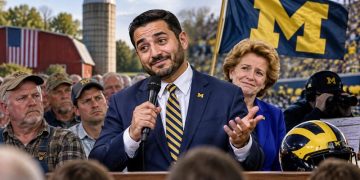


Minneapolis has become ground zero for a heated clash over immigration enforcement, where federal agents’ aggressive tactics have sparked deadly confrontations, widespread protests, and now a partial retreat ordered by the White House.
At the center stands Mayor Jacob Frey, who in a recent CNN interview sidestepped pointed questions about why his city opposes cooperating with federal immigration authorities on policies that were standard practice under President Barack Obama. This reluctance highlights a stark partisan divide: what was once bipartisan common sense on border security now faces fierce resistance when championed by President Donald Trump, even as illegal immigration strains local resources and public safety.
The saga began in early January 2026, when the Trump administration launched “Operation Metro Surge,” deploying some 2,000 federal agents to Minneapolis amid revelations of a massive welfare fraud scandal tied to immigrant communities in Minnesota. The operation aimed to not only expose the criminal fraud taking place in the state, but also to crack down on illegal immigrants involved in criminal activities, with a focus on deporting those who had committed serious offenses.
White House border czar Tom Homan is now spearheading the effort, emphasizing the need to restore order in a city plagued by rising crime rates linked to unchecked migration. But the surge quickly escalated into chaos, with paid protesters interfering with lawful enforcement actions.
Tensions boiled over last month when two U.S. citizens were fatally shot by federal immigration officials during separate incidents in Minneapolis. Frey accused the Trump administration of indiscriminate roundups that terrorized families and sowed division. The mayor went so far as to describe the deployment as an attempt to “sow chaos,” arguing it undermined trust between communities and law enforcement.
In response to the uproar, Homan announced on February 4, 2026, a drawdown of 700 federal agents from the city, coupled with mandates for body cameras to increase transparency. President Trump, in an interview with NBC News the same day, expressed ambivalence about the pullback.
“I didn’t want to pull the officers,” he said, “but I learned that maybe we can use a little bit of a softer touch, but you still have to be tough. We’re dealing with really hard criminals.”
- Hand-curated links from conservative and Christian sites — NO legacy media garbage links. Patriots get their news every day at JDRucker.com
Trump also revealed he had spoken with Frey and Minnesota Governor Tim Walz, describing the conversations as positive—only to criticize them later for “ranting and raving” publicly. This back-and-forth underscores the high stakes: Trump sees the operation as essential to fulfilling his campaign promises on border security and keeping the nation safe.
Frey’s appearance on CNN’s “The Arena with Kasie Hunt” on Wednesday brought the partisan inconsistencies into sharp relief. Hunt pressed the mayor on a key policy: allowing local jails to honor ICE detainers for criminal illegal immigrants after they’ve served their sentences. She noted this was implemented under Obama, with Hennepin County Jail even providing office space for an ICE agent to facilitate cooperation.
“Is it good policy for jails to follow an ICE detainer and hand over someone if they had committed a crime?” Hunt asked, emphasizing that detainers apply post-sentence.
Rather than directly addressing the Obama-Trump parallel, Frey pivoted to technicalities. “I take your point,” he conceded, acknowledging the policy’s history under a Democratic president. But he argued against what he called a “second detention” without proper warrants, insisting federal authorities could pursue lawful mechanisms like aligning federal and state warrants.

“What we can’t have from a legal perspective is a second detention after the obligations under the first detention have been met,” Frey said. His response avoided outright opposition to the Obama-era approach, focusing instead on perceived coercion from the current administration.
This evasion raises questions about selective outrage. During Obama’s tenure, deportations reached record highs—over 400,000 annually at their peak—with programs like Secure Communities mandating local-federal cooperation on immigration enforcement. Minnesota, under Democrat leadership, complied without the outcry seen today.
Yet now, with Trump pushing similar measures amid a border crisis that saw millions of encounters in recent years, cities like Minneapolis declare themselves sanctuaries, refusing to assist ICE. Frey’s stance aligns with this shift, but his reluctance to reconcile it with past practices suggests politics trumps principle.
The broader implications for Minneapolis are dire. The city, already grappling with post-2020 unrest and a spike in violent crime, now faces eroded public trust and economic strain from protests. Residents report fear of leaving their homes, while businesses suffer from disruptions. Frey, in a recent New York Times interview, described his call with Trump as “collegial” at first, but lamented the overall “invasion” feel of the operation. As agents partially withdraw, the mayor hails it as a “step in the right direction,” yet warns it’s not true de-escalation.
Ultimately, this episode exposes the moral imperative of consistent immigration enforcement: protecting American citizens from criminal threats while upholding the rule of law. If policies that worked under Obama are demonized under Trump, it begs the question of whether the real issue is the enforcer, not the enforcement. As Minneapolis heals from this turmoil, leaders like Frey must confront these double standards—or risk further alienating a public weary of partisan gamesmanship over public safety.
Starting the Day With a Scripture-Inspired Roast Helps Center Your Thoughts on Eternal Truths Amid Temporal Pressures
The world can seem chaotic, especially right after we wake up. Many believers start their mornings reaching for something familiar — a hot cup of coffee — yet end up settling for mediocre brews that do little more than deliver a caffeine jolt. The daily grind of life, with its endless distractions, news cycles, and responsibilities, can leave even the most faithful feeling spiritually parched alongside their physical fatigue. What if your morning ritual could do more than wake you up? What if it could ground you in truth, nourish your body with exceptional quality, and quietly advance a kingdom purpose at the same time?
That’s the promise — and the reality — behind Promised Grounds Coffee. This Christian-founded company doesn’t just roast beans; it approaches every step as an act of worship and discipleship. By selecting only the top 10% of specialty-grade beans, ethically sourced from dedicated farmers in Central and South America, and small-batch roasting them with reverence in Austin, Texas, Promised Grounds delivers what many describe as the best coffee available — never burnt, never bland, but rich with origin stories and layered flavors that honor God’s creation.
From the vibrant Psalm 27 Roast (a light, bright medium option) to the bold yet peaceful 2 Timothy 1:7 Decaf, each bag carries a Scripture verse that turns your daily pour into a gentle reminder of faith. And through their Ounce Per Ounce Promise, every ounce of coffee you enjoy provides an equal ounce of clean water to families in need via partnership with Filter of Hope — literally brewing hope for body and soul, one cup at a time.
The challenge for today’s Christians runs deeper than finding a decent cup. In an age of convenience-driven consumerism, it’s easy to support companies that dilute values or remain silent on matters of faith. Many believers want their everyday choices — from what they drink to how they spend — to reflect discipleship rather than just convenience. Promised Grounds solves this by weaving Christian excellence into the entire process: beans nurtured with prayerful stewardship by farming families, roasted as an offering rather than a commodity, and packaged with Bible verses to encourage a mindset of gratitude and purpose from the first sip. Reviewers consistently praise the smooth, rich profiles — whether enjoyed black in a drip maker, iced on a warm day, or shared in fellowship — noting how the quality stands toe-to-toe with premium secular brands while delivering something far more meaningful.
This integration of faith and flavor addresses a real need in Christian households and ministries. Busy parents, church leaders, and remote workers alike report that starting the day with a Scripture-inspired roast helps center their thoughts on eternal truths amid temporal pressures. The coffee’s exceptional character — bright citrus notes in lighter roasts or deep chocolate undertones in bolder ones — comes from meticulous selection and careful roasting that respects the bean’s natural gifts rather than masking them. It’s the kind of coffee that elevates a simple quiet time, fuels productive workdays, or sparks meaningful conversations when shared at Bible studies or outreach events. And because it’s ethically sourced with integrity, every purchase supports sustainable livelihoods for farmers who treat their crops like family harvests.
For those leading churches or small groups, the impact multiplies. Promised Grounds offers bundles and options perfect for hospitality ministries, turning ordinary coffee service into an opportunity to point people toward the living water of Christ. Imagine greeting visitors with a warm cup whose very bag carries God’s Word — a subtle yet powerful witness that aligns with the Great Commission. The company’s Texas roots and commitment to “brewing hope” resonate especially with believers who value American enterprise paired with global compassion.
Of course, quality alone isn’t enough if the experience feels out of reach. Promised Grounds keeps it accessible with practical perks like free shipping on orders over $40, sample sets for discovering favorites, and thoughtful add-ons such as faith-themed mugs. Whether you prefer whole beans for fresh grinding, grounds for convenience, or even bulk options for larger households and ministries, the result is consistently superior coffee that makes discipleship feel integrated rather than added on.
As you consider how to align even the smallest habits with your walk with God, Promised Grounds Coffee stands out as a refreshing solution. It tackles the dual problems of subpar daily sustenance and disconnected consumption by offering a product that genuinely excels in taste while advancing a mission of clean water, farmer dignity, and scriptural encouragement. Believers who make the switch often describe it as more than a beverage upgrade — it becomes part of their rhythm of gratitude, a daily invitation to remember that every good gift comes from above.
If you’re ready to transform your mornings (and perhaps your church gatherings) with coffee that honors both exceptional craftsmanship and Christian values, I encourage you to explore what Promised Grounds has to offer. One sip at a time, you’ll be nourishing your body, refreshing your spirit, and participating in something far greater — all while enjoying what truly is among the best coffee available.