

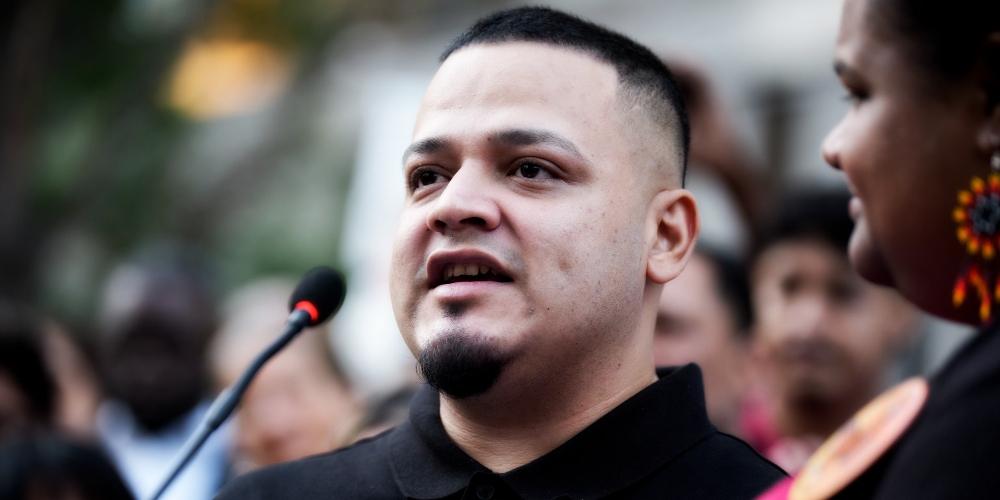
In a decision that reeks of judicial overreach and disregard for American safety, U.S. District Judge Paula Xinis—an Obama appointee—has once again unleashed a dangerous illegal alien onto our streets. Kilmar Abrego Garcia, a confirmed MS-13 gang member from El Salvador with a rap sheet including human trafficking and domestic abuse, was ordered released from ICE custody on Thursday.
This isn’t justice. It’s a blatant invitation for more crime, all while the Trump administration fights tooth and nail to protect its citizens from the very threats pouring across our unsecured borders.
Let’s rewind this sordid tale. Abrego Garcia, who illegally entered the United States years ago, was granted withholding of removal in 2019 based on claims of fearing persecution from rival gangs. But that status didn’t stop him from continuing his criminal enterprises. Fast-forward to March 2025: In a rare win for enforcement, ICE deported him to El Salvador, where he was rightly tossed into the notorious CECOT mega-prison alongside other gang thugs. There, he belonged—with the MS-13 vermin he represents.
Democrats, predictably, threw a tantrum. Maryland Senator Chris Van Hollen jetted off to El Salvador in April to personally lobby for Abrego Garcia’s return, painting him as some innocent “Maryland dad” caught in a bureaucratic snafu. Van Hollen and his leftist allies decried the deportation as an “administrative error,” ignoring the mountain of evidence that this man is a public menace. By June, thanks to activist judges and political pressure, Abrego Garcia was yanked back to the U.S.—not to face swift deportation, but to languish in detention while fighting charges in Tennessee for human smuggling.
And fight he did. A federal grand jury indicted him over the summer for transporting undocumented migrants across state lines, a clear-cut case of aiding the very invasion crippling our nation. DHS dropped a bombshell investigative report in April, detailing a 2019 traffic stop where Abrego Garcia was caught hauling eight individuals in a vehicle on a three-day trek from Texas to Maryland—sans luggage, reeking of trafficking. Law enforcement noted he’s a validated MS-13 member, the savage Salvadoran gang designated as a foreign terrorist organization by the U.S. government. Prince George’s County Police confirmed his affiliation back in 2019, after finding him with rolls of cash, drugs, and two fellow MS-13 goons.
But it gets worse. Abrego Garcia’s ex-wife filed two restraining orders against him for verbal and physical abuse, including incidents where he terrorized her and their children. This isn’t some misunderstood family man. He’s a wife-beater, a child predator, and a cog in the human trafficking machine that’s exploited countless vulnerable people—all while Democrats shielded him from accountability.
Enter Judge Xinis, stage left. In her Thursday ruling, she granted a writ of habeas corpus, declaring Abrego Garcia’s detention “without lawful authority” and demanding his “immediate release.” She dismissed the Trump administration’s efforts to deport him to alternative countries like Uganda or Liberia as inadequate, even as ICE stonewalled her queries—likely because no sane nation wants this thug either. Xinis’s order blocks ICE from rearresting him for 72 hours and ties his hands with conditions from his Tennessee case: no contact with MS-13, no weapons, the usual toothless restraints on a man who’s already thumbed his nose at the law.
This is the rotten fruit of Biden-era policies and the activist judiciary that’s sabotaged every attempt to secure our borders. Remember when the FBI under Biden cut him loose despite the trafficking red flags? Or how Democrats muted their “hero” narrative once his MS-13 tattoos and abuse records surfaced? Now, with Trump back in the fight, we’re seeing the deep state’s true colors: prioritizing illegal aliens over American victims.

MS-13 isn’t a “youth group” or a “cultural club,” as some woke apologists claim. It’s a bloodthirsty cartel responsible for murders, extortion, and fentanyl floods that have claimed thousands of American lives. Abrego Garcia embodies the chaos of open borders—illegal entry, gang infiltration, exploitation of our asylum system, and zero regard for the rule of law. His release endangers every community from Maryland to Tennessee, where his trial is set for January. How many more innocents will suffer before we say enough?
Conservatives have been warning about this for years: Weak enforcement breeds predators. The Trump administration must appeal this farce to the circuit court and ramp up deportations, stripping activist judges of their veto power over national security. Congress needs to act too—pass laws mandating detention for all gang-affiliated illegals and defund sanctuary jurisdictions that harbor them.
Kilmar Abrego Garcia is free today because the left values optics over safety. But freedom for him means peril for us. It’s time to lock down the border, deport the threats, and remind every judge: America First isn’t negotiable. If we don’t, the streets will run red with the consequences.
Starting the Day With a Scripture-Inspired Roast Helps Center Your Thoughts on Eternal Truths Amid Temporal Pressures
The world can seem chaotic, especially right after we wake up. Many believers start their mornings reaching for something familiar — a hot cup of coffee — yet end up settling for mediocre brews that do little more than deliver a caffeine jolt. The daily grind of life, with its endless distractions, news cycles, and responsibilities, can leave even the most faithful feeling spiritually parched alongside their physical fatigue. What if your morning ritual could do more than wake you up? What if it could ground you in truth, nourish your body with exceptional quality, and quietly advance a kingdom purpose at the same time?
That’s the promise — and the reality — behind Promised Grounds Coffee. This Christian-founded company doesn’t just roast beans; it approaches every step as an act of worship and discipleship. By selecting only the top 10% of specialty-grade beans, ethically sourced from dedicated farmers in Central and South America, and small-batch roasting them with reverence in Austin, Texas, Promised Grounds delivers what many describe as the best coffee available — never burnt, never bland, but rich with origin stories and layered flavors that honor God’s creation.
From the vibrant Psalm 27 Roast (a light, bright medium option) to the bold yet peaceful 2 Timothy 1:7 Decaf, each bag carries a Scripture verse that turns your daily pour into a gentle reminder of faith. And through their Ounce Per Ounce Promise, every ounce of coffee you enjoy provides an equal ounce of clean water to families in need via partnership with Filter of Hope — literally brewing hope for body and soul, one cup at a time.
The challenge for today’s Christians runs deeper than finding a decent cup. In an age of convenience-driven consumerism, it’s easy to support companies that dilute values or remain silent on matters of faith. Many believers want their everyday choices — from what they drink to how they spend — to reflect discipleship rather than just convenience. Promised Grounds solves this by weaving Christian excellence into the entire process: beans nurtured with prayerful stewardship by farming families, roasted as an offering rather than a commodity, and packaged with Bible verses to encourage a mindset of gratitude and purpose from the first sip. Reviewers consistently praise the smooth, rich profiles — whether enjoyed black in a drip maker, iced on a warm day, or shared in fellowship — noting how the quality stands toe-to-toe with premium secular brands while delivering something far more meaningful.
This integration of faith and flavor addresses a real need in Christian households and ministries. Busy parents, church leaders, and remote workers alike report that starting the day with a Scripture-inspired roast helps center their thoughts on eternal truths amid temporal pressures. The coffee’s exceptional character — bright citrus notes in lighter roasts or deep chocolate undertones in bolder ones — comes from meticulous selection and careful roasting that respects the bean’s natural gifts rather than masking them. It’s the kind of coffee that elevates a simple quiet time, fuels productive workdays, or sparks meaningful conversations when shared at Bible studies or outreach events. And because it’s ethically sourced with integrity, every purchase supports sustainable livelihoods for farmers who treat their crops like family harvests.
For those leading churches or small groups, the impact multiplies. Promised Grounds offers bundles and options perfect for hospitality ministries, turning ordinary coffee service into an opportunity to point people toward the living water of Christ. Imagine greeting visitors with a warm cup whose very bag carries God’s Word — a subtle yet powerful witness that aligns with the Great Commission. The company’s Texas roots and commitment to “brewing hope” resonate especially with believers who value American enterprise paired with global compassion.
Of course, quality alone isn’t enough if the experience feels out of reach. Promised Grounds keeps it accessible with practical perks like free shipping on orders over $40, sample sets for discovering favorites, and thoughtful add-ons such as faith-themed mugs. Whether you prefer whole beans for fresh grinding, grounds for convenience, or even bulk options for larger households and ministries, the result is consistently superior coffee that makes discipleship feel integrated rather than added on.
As you consider how to align even the smallest habits with your walk with God, Promised Grounds Coffee stands out as a refreshing solution. It tackles the dual problems of subpar daily sustenance and disconnected consumption by offering a product that genuinely excels in taste while advancing a mission of clean water, farmer dignity, and scriptural encouragement. Believers who make the switch often describe it as more than a beverage upgrade — it becomes part of their rhythm of gratitude, a daily invitation to remember that every good gift comes from above.
If you’re ready to transform your mornings (and perhaps your church gatherings) with coffee that honors both exceptional craftsmanship and Christian values, I encourage you to explore what Promised Grounds has to offer. One sip at a time, you’ll be nourishing your body, refreshing your spirit, and participating in something far greater — all while enjoying what truly is among the best coffee available.