
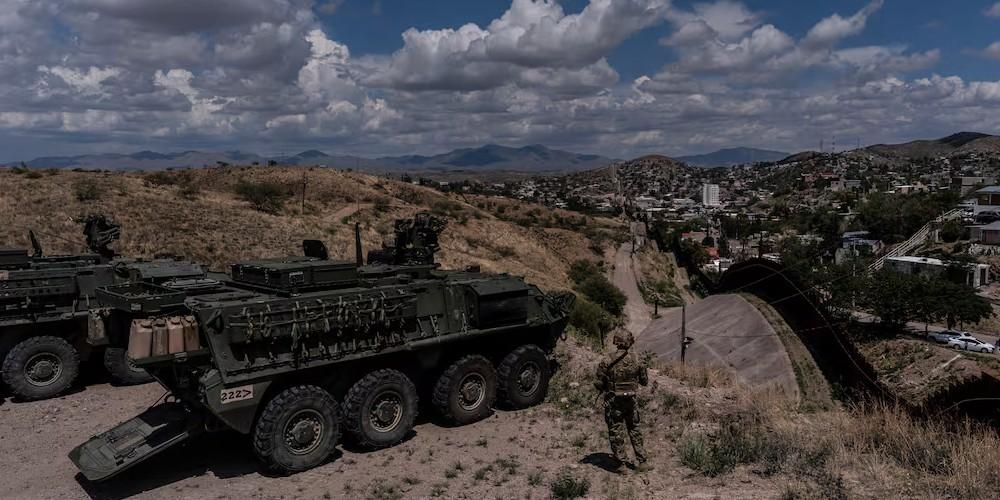
The open stretches of public land along California’s southern frontier have long served as a quiet reminder of America’s vulnerability. But no more. On Wednesday, the Trump administration handed over jurisdiction of roughly 760 acres in San Diego and Imperial counties to the U.S. Navy, carving out a fresh militarized zone to clamp down on the relentless tide of illegal crossings. This corridor, snaking from the edge of the Otay Mountain Wilderness nearly to the Arizona line, traces through the Imperial Valley and past border towns like Tecate—a notorious hotspot where smugglers and cartels have run roughshod for years.
It’s a direct callback to 1907, when President Theodore Roosevelt first set aside these lands for exactly this purpose: guarding the nation’s edge. Now, with the Navy in charge for the next three years, the focus sharpens on bolstering patrols, erecting barriers, and deploying surveillance tech to choke off the flow.
The Department of the Interior explained that this slice of terrain “is one of the highest traffic regions for unlawful crossings along the southern border, creating significant national security challenges and contributing to environmental degradation.” Trampled trails, trashed habitats, and worse—trafficked humans funneled through like commodities—will face a stiffer reckoning.
Interior Secretary Doug Burgum didn’t mince words in the announcement. “Trump has made it clear that securing our border and restoring American sovereignty are top national priorities,” he said, adding that the move puts “the safety and security of the American people first.”
It’s the kind of no-nonsense action that echoes the expansions rolled out earlier this year in Arizona, New Mexico, and Texas, where similar handoffs to the military have slashed apprehensions by more than 90% in some sectors, according to Border Patrol data. Nationwide, illegal entries have cratered to levels unseen since the 1960s, a stark turnaround from the chaos of prior years when millions poured across unchecked.
Yet not everyone’s cheering. Groups like the Brennan Center for Justice are sounding alarms, claiming these zones turn soldiers into “a de facto border police force, with soldiers apprehending, searching, and detaining people who cross the border unlawfully.”
They warn of “alarming implications for democratic freedoms” and accuse the president of “stretching his emergency powers past their limits to usurp the role of Congress.” It’s the same chorus that howled when Trump declared illegal immigration a national emergency back in January, paving the way for over 7,000 troops, drones, and armored vehicles to flood the line. Legal challenges have piled up, including a fresh federal ruling this week ordering the administration to pull back California National Guard deployments in Los Angeles—troops Trump federalized without Governor Gavin Newsom’s blessing to ramp up interior enforcement.
With cartels being forced to turn to alternative entry routes—tunneling under barriers, launching drones loaded with fentanyl, and even clashing with agents in firefights—handing the reins to the Navy is a countermeasure against escalation. Whispers in border communities suggest smuggling networks, possibly with ties to foreign adversaries, have adapted too well to the old setup.
Is this just about illegal aliens, or is it a quiet admission that the southern line has become a pipeline for something deadlier? Recent seizures, like the massive Venezuelan oil tanker nabbed off the coast just yesterday for funneling sanctioned crude to terror groups, hint at how focused the administration is on keeping the borders secure.
For families in places like El Centro or Calexico, the change hits close to home. Ranchers who’ve watched their properties turn into no-man’s-lands report fewer intrusions already from the earlier zones.
“We’ve been asking for this for decades,” one Imperial Valley farmer told Fox News, his voice carrying the weariness of too many close calls. Environmentalists decry the footprint of military ops, as they’re wont to do, though the Interior Department counters that curbing foot traffic will let the land heal—fewer boot prints scarring the desert floor.
This is triage for a wound that’s festered too long. The California push caps a year of methodical fortification, from razor wire in the Rio Grande Valley to helicopter sweeps over the Sonoran sands. With Border Czar Tom Homan vowing no letup—recently defending ICE sweeps in sanctuary cities like Minneapolis as vital to rooting out “public safety threats”—the message rings clear: the era of porous borders ends now. Americans tired of footing the bill for unchecked influxes, from strained hospitals to cartel-fueled crime spikes, can see the payoff in the numbers. Crossings down, communities safer, sovereignty reclaimed.

As the sun sets over the new Navy domain, one thing stands certain: the days of treating the border like a suggestion are over. This land, once a backdoor for the lawless, now stands as a testament to resolve—a bulwark not just for California, but for the republic it anchors.
Starting the Day With a Scripture-Inspired Roast Helps Center Your Thoughts on Eternal Truths Amid Temporal Pressures
The world can seem chaotic, especially right after we wake up. Many believers start their mornings reaching for something familiar — a hot cup of coffee — yet end up settling for mediocre brews that do little more than deliver a caffeine jolt. The daily grind of life, with its endless distractions, news cycles, and responsibilities, can leave even the most faithful feeling spiritually parched alongside their physical fatigue. What if your morning ritual could do more than wake you up? What if it could ground you in truth, nourish your body with exceptional quality, and quietly advance a kingdom purpose at the same time?
That’s the promise — and the reality — behind Promised Grounds Coffee. This Christian-founded company doesn’t just roast beans; it approaches every step as an act of worship and discipleship. By selecting only the top 10% of specialty-grade beans, ethically sourced from dedicated farmers in Central and South America, and small-batch roasting them with reverence in Austin, Texas, Promised Grounds delivers what many describe as the best coffee available — never burnt, never bland, but rich with origin stories and layered flavors that honor God’s creation.
From the vibrant Psalm 27 Roast (a light, bright medium option) to the bold yet peaceful 2 Timothy 1:7 Decaf, each bag carries a Scripture verse that turns your daily pour into a gentle reminder of faith. And through their Ounce Per Ounce Promise, every ounce of coffee you enjoy provides an equal ounce of clean water to families in need via partnership with Filter of Hope — literally brewing hope for body and soul, one cup at a time.
The challenge for today’s Christians runs deeper than finding a decent cup. In an age of convenience-driven consumerism, it’s easy to support companies that dilute values or remain silent on matters of faith. Many believers want their everyday choices — from what they drink to how they spend — to reflect discipleship rather than just convenience. Promised Grounds solves this by weaving Christian excellence into the entire process: beans nurtured with prayerful stewardship by farming families, roasted as an offering rather than a commodity, and packaged with Bible verses to encourage a mindset of gratitude and purpose from the first sip. Reviewers consistently praise the smooth, rich profiles — whether enjoyed black in a drip maker, iced on a warm day, or shared in fellowship — noting how the quality stands toe-to-toe with premium secular brands while delivering something far more meaningful.
This integration of faith and flavor addresses a real need in Christian households and ministries. Busy parents, church leaders, and remote workers alike report that starting the day with a Scripture-inspired roast helps center their thoughts on eternal truths amid temporal pressures. The coffee’s exceptional character — bright citrus notes in lighter roasts or deep chocolate undertones in bolder ones — comes from meticulous selection and careful roasting that respects the bean’s natural gifts rather than masking them. It’s the kind of coffee that elevates a simple quiet time, fuels productive workdays, or sparks meaningful conversations when shared at Bible studies or outreach events. And because it’s ethically sourced with integrity, every purchase supports sustainable livelihoods for farmers who treat their crops like family harvests.
For those leading churches or small groups, the impact multiplies. Promised Grounds offers bundles and options perfect for hospitality ministries, turning ordinary coffee service into an opportunity to point people toward the living water of Christ. Imagine greeting visitors with a warm cup whose very bag carries God’s Word — a subtle yet powerful witness that aligns with the Great Commission. The company’s Texas roots and commitment to “brewing hope” resonate especially with believers who value American enterprise paired with global compassion.
Of course, quality alone isn’t enough if the experience feels out of reach. Promised Grounds keeps it accessible with practical perks like free shipping on orders over $40, sample sets for discovering favorites, and thoughtful add-ons such as faith-themed mugs. Whether you prefer whole beans for fresh grinding, grounds for convenience, or even bulk options for larger households and ministries, the result is consistently superior coffee that makes discipleship feel integrated rather than added on.
As you consider how to align even the smallest habits with your walk with God, Promised Grounds Coffee stands out as a refreshing solution. It tackles the dual problems of subpar daily sustenance and disconnected consumption by offering a product that genuinely excels in taste while advancing a mission of clean water, farmer dignity, and scriptural encouragement. Believers who make the switch often describe it as more than a beverage upgrade — it becomes part of their rhythm of gratitude, a daily invitation to remember that every good gift comes from above.
If you’re ready to transform your mornings (and perhaps your church gatherings) with coffee that honors both exceptional craftsmanship and Christian values, I encourage you to explore what Promised Grounds has to offer. One sip at a time, you’ll be nourishing your body, refreshing your spirit, and participating in something far greater — all while enjoying what truly is among the best coffee available.