

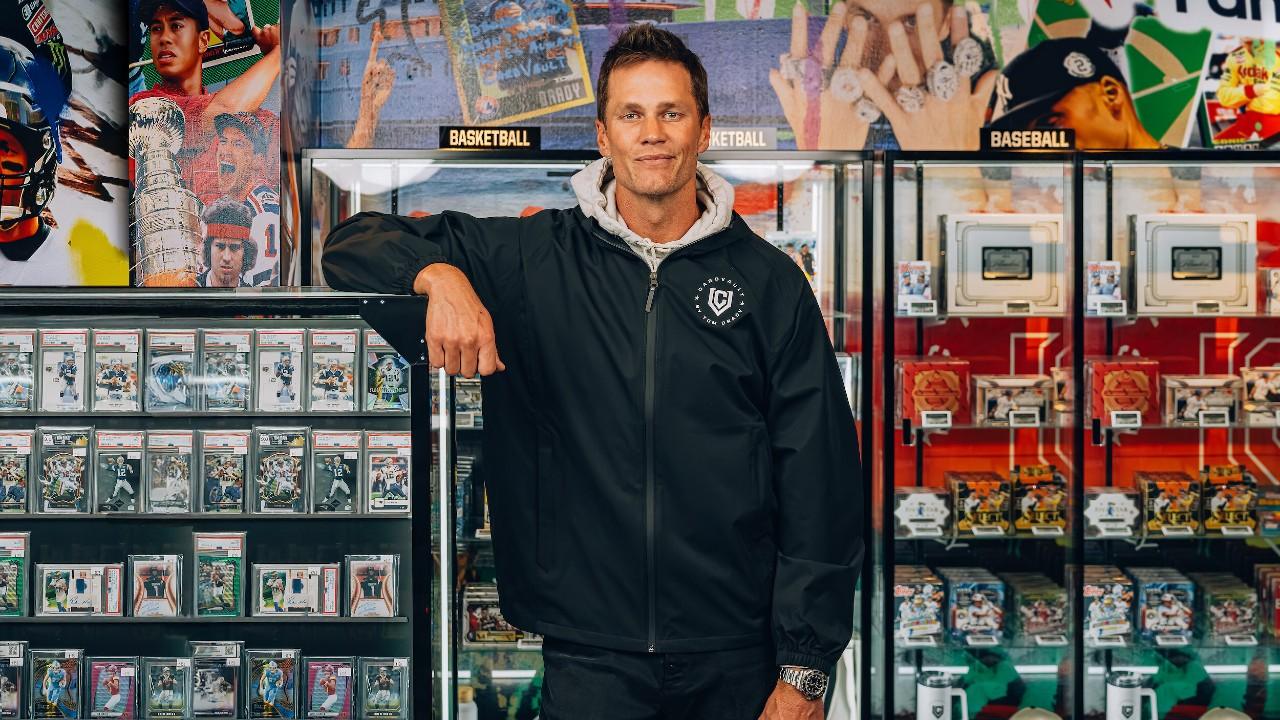
Tom Brady came home. California thanked him the only way it knows how.
A little more than a week after the seven-time Super Bowl champion cut the ribbon at CardVault by Tom Brady in Palo Alto, somebody put a rock through the glass. Then they put a rock through the cases. Then they walked out with about 60 trading cards worth more than $12,000 and vanished into a state that has spent a decade teaching thieves they can vanish.
Palo Alto police say the break-in hit the shop at Town & Country Village, 855 El Camino Real, around 12:30 a.m. Saturday. Window smashed. Display cases smashed. Cards gone. The suspects were still free as of this week. No names. No arrests. Just another Bay Area storefront learning what “public safety” means when the politicians who run the place treat property crime like a lifestyle choice.
Brady grew up a few miles away in San Mateo. He told KTVU the opening felt “very surreal.” Fans waited more than eight hours. The mayor showed up. So did the police chief. Brady signed hats, signed cards, signed a wall, and talked about collecting as a kid who loved the 49ers, the Giants, and the Warriors.
Very surreal. Growing up in San Mateo. I got into collecting when I was a young kid. A huge fan of the 49ers Niners, and San Francisco Giants, the Warriors, and it was very surreal to come back.
Seven days later the vault was a crime scene. That is the California welcome wagon.
A Card Shop in a State That Cannot Guard a Window
CardVault sells sports cards, autographed memorabilia, Pokémon, Magic, the whole modern collector catalog. The Palo Alto store is the chain’s third location in California, with shops already in San Francisco and Sacramento. Brady took a stake in the company in 2025 and has been showing up at openings the way he used to show up in January. Crowds follow him. So, apparently, do people who smash glass for a living.
This is not CardVault’s first bite. Last fall a thief walked out of the SoHo shop in New York with nearly $10,000 in baseball and Pokémon cards after working the tap-to-pay terminal until an employee thought the sale had gone through. Fox News reported the same caper. New York at least put a face on a poster. Palo Alto has a broken window and a shrug.
Collectibles are portable, easy to flip, and hard to trace once they leave the case. Thieves figured that out years ago. What they also figured out is that California made the math easy. Smash, grab, run. If you stay under the old felony thresholds, you were a misdemeanor. If you get caught at all.
Proposition 36 was supposed to put some teeth back after voters finally got sick of watching pharmacies lock deodorant behind plexiglass. The teeth are uneven. The glass at CardVault still lost.
Lay not up for yourselves treasures upon earth, where moth and rust doth corrupt, and where thieves break through and steal. Matthew said it first. Brady built a literal vault anyway. In this state, the verse reads less like poetry and more like a site survey.
The Opening Crowd Included the Police Chief
That is the part that should stay in your head. On August 15, Palo Alto’s mayor and its police chief stood with Brady while he cut the ribbon on a store full of high-value cardboard. By the following weekend, one or more people had enough time, enough nerve, and enough contempt for the law to walk up to that same store in the middle of the night, break it open, and clean out the cases.
Nobody is claiming the chief can sleep on El Camino Real. That is not the point. The point is the culture. You can pack a ribbon-cutting with officials. You can post the hero-quarterback photos. You cannot paper over a state that spent years decriminalizing the grab and then acted stunned when the grabbers showed up for the expensive stuff.

Walgreens ran. Target ran. Whole corridors of San Francisco turned into plywood and regret. Palo Alto likes to pretend it is a different California, the nice one, the one with venture capital and good schools and a shopping village that still has tenants. Then a football legend opens a store on El Camino Real and lasts one week before the window gives out.
Brady can afford the loss. A lot of shopkeepers in this state could not. That is why so many of them left. That is why the ones who stay put merchandise in locked cabinets and hire guards to watch grown adults shop for toothpaste. A $12,000 card haul is a local story. The habit behind it is the story that emptied half a downtown.
The looters are still on the loose. Of course they are. In California, that sentence has become a weather report.
Starting the Day With a Scripture-Inspired Roast Helps Center Your Thoughts on Eternal Truths Amid Temporal Pressures
The world can seem chaotic, especially right after we wake up. Many believers start their mornings reaching for something familiar — a hot cup of coffee — yet end up settling for mediocre brews that do little more than deliver a caffeine jolt. The daily grind of life, with its endless distractions, news cycles, and responsibilities, can leave even the most faithful feeling spiritually parched alongside their physical fatigue. What if your morning ritual could do more than wake you up? What if it could ground you in truth, nourish your body with exceptional quality, and quietly advance a kingdom purpose at the same time?
That’s the promise — and the reality — behind Promised Grounds Coffee. This Christian-founded company doesn’t just roast beans; it approaches every step as an act of worship and discipleship. By selecting only the top 10% of specialty-grade beans, ethically sourced from dedicated farmers in Central and South America, and small-batch roasting them with reverence in Austin, Texas, Promised Grounds delivers what many describe as the best coffee available — never burnt, never bland, but rich with origin stories and layered flavors that honor God’s creation.
From the vibrant Psalm 27 Roast (a light, bright medium option) to the bold yet peaceful 2 Timothy 1:7 Decaf, each bag carries a Scripture verse that turns your daily pour into a gentle reminder of faith. And through their Ounce Per Ounce Promise, every ounce of coffee you enjoy provides an equal ounce of clean water to families in need via partnership with Filter of Hope — literally brewing hope for body and soul, one cup at a time.
The challenge for today’s Christians runs deeper than finding a decent cup. In an age of convenience-driven consumerism, it’s easy to support companies that dilute values or remain silent on matters of faith. Many believers want their everyday choices — from what they drink to how they spend — to reflect discipleship rather than just convenience. Promised Grounds solves this by weaving Christian excellence into the entire process: beans nurtured with prayerful stewardship by farming families, roasted as an offering rather than a commodity, and packaged with Bible verses to encourage a mindset of gratitude and purpose from the first sip. Reviewers consistently praise the smooth, rich profiles — whether enjoyed black in a drip maker, iced on a warm day, or shared in fellowship — noting how the quality stands toe-to-toe with premium secular brands while delivering something far more meaningful.
This integration of faith and flavor addresses a real need in Christian households and ministries. Busy parents, church leaders, and remote workers alike report that starting the day with a Scripture-inspired roast helps center their thoughts on eternal truths amid temporal pressures. The coffee’s exceptional character — bright citrus notes in lighter roasts or deep chocolate undertones in bolder ones — comes from meticulous selection and careful roasting that respects the bean’s natural gifts rather than masking them. It’s the kind of coffee that elevates a simple quiet time, fuels productive workdays, or sparks meaningful conversations when shared at Bible studies or outreach events. And because it’s ethically sourced with integrity, every purchase supports sustainable livelihoods for farmers who treat their crops like family harvests.
For those leading churches or small groups, the impact multiplies. Promised Grounds offers bundles and options perfect for hospitality ministries, turning ordinary coffee service into an opportunity to point people toward the living water of Christ. Imagine greeting visitors with a warm cup whose very bag carries God’s Word — a subtle yet powerful witness that aligns with the Great Commission. The company’s Texas roots and commitment to “brewing hope” resonate especially with believers who value American enterprise paired with global compassion.
Of course, quality alone isn’t enough if the experience feels out of reach. Promised Grounds keeps it accessible with practical perks like free shipping on orders over $40, sample sets for discovering favorites, and thoughtful add-ons such as faith-themed mugs. Whether you prefer whole beans for fresh grinding, grounds for convenience, or even bulk options for larger households and ministries, the result is consistently superior coffee that makes discipleship feel integrated rather than added on.
As you consider how to align even the smallest habits with your walk with God, Promised Grounds Coffee stands out as a refreshing solution. It tackles the dual problems of subpar daily sustenance and disconnected consumption by offering a product that genuinely excels in taste while advancing a mission of clean water, farmer dignity, and scriptural encouragement. Believers who make the switch often describe it as more than a beverage upgrade — it becomes part of their rhythm of gratitude, a daily invitation to remember that every good gift comes from above.
If you’re ready to transform your mornings (and perhaps your church gatherings) with coffee that honors both exceptional craftsmanship and Christian values, I encourage you to explore what Promised Grounds has to offer. One sip at a time, you’ll be nourishing your body, refreshing your spirit, and participating in something far greater — all while enjoying what truly is among the best coffee available.