
 (DCNF)—Voters will cast ballots on several ballot initiatives addressing voter identification, abortion, data centers and other issues in the 2026 election cycle.
More than 140 total measures across 40 states plan to touch on some of the most hot-button issues in politics. Several states ranging from Virginia to California are asking voters to decide whether to amend their state constitutions on elections and social issues.
Voters in Idaho, Virginia and Missouri will decide whether to keep or amend their states’ abortion laws. Measures in Virginia and Nevada would enshrine abortion legalization in the states’ constitutions before the point of fetal viability, which happens around 24 weeks of pregnancy.
Question 1 of Virginia’s ballot initiatives would also prevent any laws restricting “personal decisions” about prenatal care, birth control, or postpartum treatment, according to the Virginia Department of Elections. In January, Democratic Virginia state lawmakers advanced a constitutional amendment on abortion rights to appear on the November ballot.
Bishop Michael Burbidge of the Diocese of Arlington issued a Sept. 12 letter urging Virginians to join the “Catholics Vote No” campaign and oppose Ballot Questions 1 and 2. The second initiative in Virginia would remove a constitutional ban on same-sex marriage in the event that the Supreme Court overturned Obergefell v. Hodges, which deemed state bans on same-sex marriage unconstitutional.
“[Ballot Question 1] threatens the health and safety of mothers and would allow for abortions targeting healthy babies all the way up to birth,” Burbidge’s letter said. “The amendment extends this so-called right even to minors. It would remove the role of parents concerning life-altering and irreversible decisions for their minor daughters.“
“The proposed amendment is extreme. It is unnecessary. And it is wrong,” the letter continues.
Democratic Virginia Gov. Abigail Spanberger and Democratic Virginia Attorney General Jay Jones expressed support for the two proposed amendments. Catholic parishes across the state, including the Basilica of St. Mary in Alexandria, Virginia, have registered parishioners to vote as part of the “Catholics Say No” campaign.
- Hand-curated links from conservative and Christian sites — NO legacy media garbage links. Patriots get their news every day at JDRucker.com
There are over 693,000 registered Catholic voters in the Dioceses of Arlington and Richmond, according to the Virginia Catholic Conference.
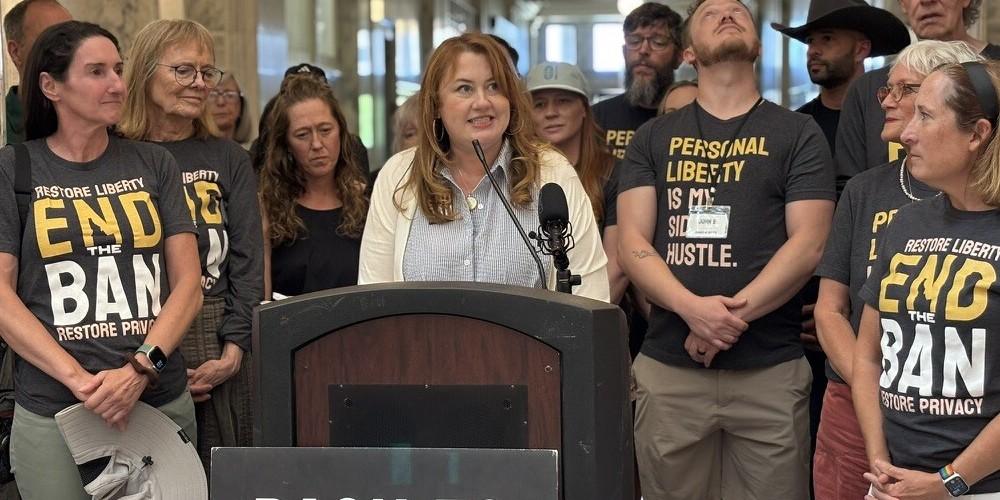
Another ballot initiative in Idaho would overturn the state’s near-total abortion ban and establish a “right” for a woman to have an abortion until viability. Idaho passed legislation in 2020 that outlawed abortions except in cases of rape, incest and life of the mother. Performing abortions outside of those circumstances is punishable by two to five years in prison.
In Missouri, Amendment 3 would repeal the 2024 abortion rights amendment and ban nearly all abortions and trans-related surgeries for minors.
California’s state Legislature introduced Proposition 40, which would institute a one-time 5% tax on the wealth of billionaires to raise tens of billions in revenue to address education services, health, nutrition and other services, according to the California Budget & Policy Center. There is a high degree of uncertainty in estimating the potential revenue from this measure, though the Legislative Analyst’s Office estimated that it would likely raise “tens of millions” of dollars in the near term. It could reduce state income tax collections by roughly $1 billion per year.

The billionaire tax intends to provide financial assistance following the federal and state-level cuts to healthcare, food assistance and K-14 public education programs, according to the California Budget & Policy Center. It would create a special fund, the 2026 Billionaire Tax Reserve Fund, to hold the revenue.
Some individuals expressed concerns about the measure being a one-time tax that would only be available for a few years, according to the California Budget & Policy Center. It would not be available to support other state services and there is uncertainty over how billionaires would respond to the tax.
In Florida, Amendment 3 would add a constitutional amendment to increase the homestead tax exemption for non-school taxes to $150,000 in 2027 and $250,000 in 2028, according to Ballotpedia. It would give new Florida residents a smaller initial exemption until they have lived in the state for five years and restrict counties and municipalities to spending property tax revenue on public safety, education, natural resource projects and infrastructure.
A homestead exemption allows homeowners to exempt a portion of its assessed value from property taxes, reducing the amount they owe.
Republican Florida Gov. Ron DeSantis called for a special legislative session in June to consider the constitutional amendment, according to Ballotpedia.
“Property tax revenue collected by local governments has nearly doubled in the past seven years and is expected to reach an astounding $83 billion by 2032,” DeSantis said. “Florida homeowners need relief. Now is the time to stand up for taxpayers, enact a historic reform, and save the home of every Floridian.”
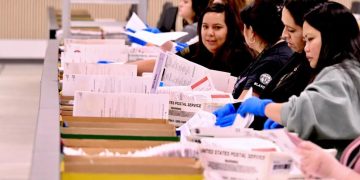
Voters in more than 15 states will decide on measures regarding voting, voter identification and citizenship. Arizona, Arkansas, Kansas, West Virginia and South Dakota are considering amending their constitutions to say that only U.S. citizens could vote in elections.
Arizona, California, Colorado, Nevada, North Carolina and Ohio will consider amendments requiring specific identification from voters when they vote in-person or by mail. These moves followed the U.S. Senate’s inability to pass the Safeguard American Voter Eligibility (SAVE) America Act, which would require voters to provide proof of U.S. citizenship to register to vote and present photo identification at the voting booth.
A Fox News poll from July found that the vast majority of Americans, 83%, support identification to register to vote and 77% support it to vote.
Massachusetts voters will consider a new statute to allow same-day voter registration. The state currently requires residents to register to vote at least ten days before Election Day, which some have argued “disenfranchises thousands of voters,” according to MassVote.
Supporters of the amendment argue that same-day registration increases voter turnout, helps election officials and is safe to implement through modern technology. Opponents expressed concerns that verifying a voter’s eligibility could cause disruption and confusion on Election Day.
Democratic Massachusetts Gov. Maura Healey endorsed the initiative, arguing that registration should be “easy and automatic,” according to MassLive.
Alaskans will decide whether to repeal a previous ballot measure that enacted ranked-choice voting in 2020 and end the state’s open primary system.
California, Colorado and Nevada would expand laws requiring voters to show identification before voting. Arizona, Ohio and North Carolina would add voter ID requirements into their state constitutions.
In Virginia, voters will consider a constitutional amendment restoring voting rights for convicted felons upon their release from prison. The state is currently one of the hardest states for someone with a felony conviction to earn back their right to vote.
At least 39 data center measures will be on the ballot in eight states. Ohio municipalities will vote on 21 measures related to data centers, including nine petitions that would ban data centers that draw over 25 megawatts of energy per month, according to The Ohio Capital Journal. Other proposals would require hyper-scale data center developers receiving tax incentives to provide financial guarantees.
Two measures in Venice, Illinois, and Nameoki, Illinois, would advise data center construction and operation in the township, according to Ballotpedia. One initiative in Maine would establish a six-month moratorium on applications for new or expanded data centers.
Data centers drove up the costs of electricity, rising 13% in Virginia, 16% in Illinois and 12% in Ohio over a one-year time frame, according to CNBC. Data center construction rose 57% from July 2025 to July while energy costs rose.
Natural gas consumption used to generate electricity for U.S. data centers is projected to increase by 15 billion cubic feet per day through 2035, putting U.S. data centers on track to consume more natural gas than nearly every other country. A New Jersey data center spilled an estimated 5,000 gallons of No. 2 diesel fuel into a nearby creek in September.
Some initiatives would address redistricting, which became a hot button issue in the 2026 midterm cycle. Voters in Missouri will consider whether to repeal new congressional districts passed by the Republican-controlled state Legislature, while an initiative in Colorado would make it harder to redraw congressional districts by requiring any such maps in 2028 to follow a more extensive approval process.
Washington, Arizona, Nebraska and Colorado will vote on whether to ban trans-identifying athletes from participating on sports teams that match their gender identity. Washington and Nebraska’s ballot measures would only apply for men competing on women’s sports, while Arizona’s and Colorado’s would apply to both male and female teams.
Another initiative in Colorado would ban sex change operations and other procedures for minors.
Some states would address education, including in Alabama, which has one proposal that would require public schools to play the national anthem at least once a year. Another would require schools to recite the Pledge of Allegiance daily and mandate school boards to adopt policies that allow student-led prayer.
Arizona and Wisconsin have measures that would ban affirmative action in schools and state government agencies. The Arizona measure, Proposition 142, would amend the state constitution to expand restrictions on preferential treatment, discrimination and diversity policies across the entire state government.
The Prohibit Government Discrimination or Preferential Treatment Amendment in Wisconsin would “prohibit any governmental entity from discriminating or granting preferential treatment based on race, sex, color, ethnicity, or national origin in public employment, public education, public contracting, or public administration,” according to Ballotpedia.
The Supreme Court ruled against race-based admissions in June 2023.
All content created by the Daily Caller News Foundation, an independent and nonpartisan newswire service, is available without charge to any legitimate news publisher that can provide a large audience. All republished articles must include our logo, our reporter’s byline and their DCNF affiliation. For any questions about our guidelines or partnering with us, please contact [email protected].
Two Storms, One Harvest

Every food crisis in living memory has been a one-shock event. The 2008 price spike was a commodity bubble. The 2020 shortages were a logistics failure. The 2022 grain scare was a war on one exporter’s ports. Each time, the system bent, adjusted, and recovered, and each time the experts assured us afterward that global markets are simply too big and too diversified to fail.
What nobody in Washington seems eager to discuss is that 2026 is shaping up to be something the modern food system has never actually faced. Two independent shocks, one climatic and one geopolitical, are converging on the same harvest cycle at the same time. Not sequentially. Simultaneously.
Start with the weather. The Pacific Ocean is currently building toward what forecasters now openly call a record event. NOAA’s Climate Prediction Center puts the odds of at least a strong El Niño near 88 percent, with roughly two in three odds it reaches “very strong” status, the tier reserved for perhaps three or four events in the entire satellite era. Every major global model now projects a median peak in Super El Niño territory, and most of them project it exceeding the 2015-16 event, which until now held the modern record. Sea surface anomalies were already brushing the super threshold in mid-July, months before these events normally peak. The atmosphere has already shifted into El Niño mode, and the event is forecast to crest in late fall and early winter.
This is not about “climate change.” It’s about the standard cycles of weather, and the cycle we’re currently in is one that has likely devastated societies in the past. We’re better prepared as a society today, but not all Americans are equally prepared.
Serious households have started doing the quiet math on their own. Grocery bills tell part of the story, and the forecast maps tell the rest, which is why long-term food storage has moved from fringe hobby to mainstream line item in the family budget, with established suppliers like Heaven’s Harvest seeing demand from people who five years ago would have rolled their eyes at the idea. That instinct is not paranoia. It is pattern recognition, and the pattern is worth walking through carefully.
Editor’s Note: Heaven’s Harvest IS a sponsor, but the warnings of this article are real and would be written even if we didn’t have a survival food sponsor. With that said, those who take advantage of what they offer can use promo code “Patriot” for 15% off.
The Fertilizer Clock Is Already Running
While the Pacific warms, the second shock has been unfolding in the Strait of Hormuz. The conflict with Iran turned the world’s most important energy chokepoint into a contested waterway, and the consequences reach far beyond the gas pump. Roughly a third of global fertilizer trade moves through Hormuz, and the disruption sent urea prices up 86 percent year over year by March, with a 53 percent jump in a single month.
The World Bank projects energy prices rising about 24 percent in 2026 and fertilizer about 31 percent. By its own accounting, fertilizer prices ran 35 percent higher in the first five months of this year than the same period last year.
Here is the mechanism the nightly news will not explain. Fertilizer is not a grocery item. It is a time-delayed input. The nitrogen a farmer in Iowa or Punjab could not afford to apply this spring does not show up as a problem this spring. It shows up as a thinner harvest six to twelve months later.
The World Bank’s own food security brief concedes that the effects of reduced applications earlier this season “are likely to become visible only later in harvest outcomes.” Translate that from institutional language into plain English and it means this. The damage is already done, it is already in the ground, and we are simply waiting for it to arrive on the shelf.
Now check the calendar. Six to twelve months from the spring planting season lands us squarely in late 2026 and early 2027. Which is precisely when the strongest El Niño in the instrumental record is forecast to peak, bringing its signature droughts to Southeast Asia, Australia, southern Africa, northern Brazil, and South Asia, the very regions that grow the world’s rice, sugar, and oilseeds.
The World Bank warns openly that a strong El Niño “could disrupt multiple crop belts simultaneously” on top of the conflict-driven input costs. Their baseline projection assumes the Middle East disruptions ease by autumn. What in the last two years of Middle East history suggests that assumption is safe?
The System Has No Slack Left
The comfortable answer is that global markets always adjust. But adjustment requires slack, and the slack is gone. Global cereal production is expected to decline from last year’s records even before El Niño does its work. The UN World Food Programme, hardly a den of right-wing preppers, is calling this the most significant disruption to its supply chains since Covid and the invasion of Ukraine, and its supply chain director put the stakes bluntly.
Today’s supply chain challenges are tomorrow’s hunger crisis.
There is also a political dimension that markets cannot price. When food gets scarce, governments do not behave like economists. They behave like politicians. Export bans, hoarding mandates, and panic buying at the national level turned the modest rice shortfall of 2008 into a global crisis, and analysts are already warning that import-dependent nations are the first dominoes.
The 2015-16 Super El Niño, a far weaker event than what is now forecast, threw tens of millions into food stress across Africa and Asia. This one is projected to be stronger, and it arrives with fertilizer already rationed by price and shipping lanes already contested by missiles.
What Joseph Knew
Scripture does not treat preparation for lean years as faithlessness. It treats it as wisdom delivered in advance to those willing to act on it.
Behold, there come seven years of great plenty throughout all the land of Egypt: And there shall arise after them seven years of famine; and all the plenty shall be forgotten in the land of Egypt.
Joseph did not respond to that warning with a hashtag or a committee. He stored grain during the years of abundance, and when the famine came, Egypt stood while its neighbors begged. The lesson is not that famine is certain. It is that the time to prepare is precisely when preparation still looks optional.
Nobody who filled a pantry in a year of plenty has ever regretted it, and nobody standing in an empty aisle has ever been glad he waited for certainty.
None of this calls for panic, and panic is the enemy of sound judgment anyway. It calls for the same unglamorous prudence our grandparents considered ordinary. Keep some cash margin, know your local growers, and put real food in deep storage while it is cheap and available, because the entire arc of this story is that cheap and available is a closing window.
Families looking for a straightforward place to start can visit Heaven’s Harvest and use promo code Patriot for 15 percent off long-term storable food. The forecasts may yet soften, the strait may yet reopen, and we should pray they do. But hope is a fine thing to hold and a foolish thing to eat.