

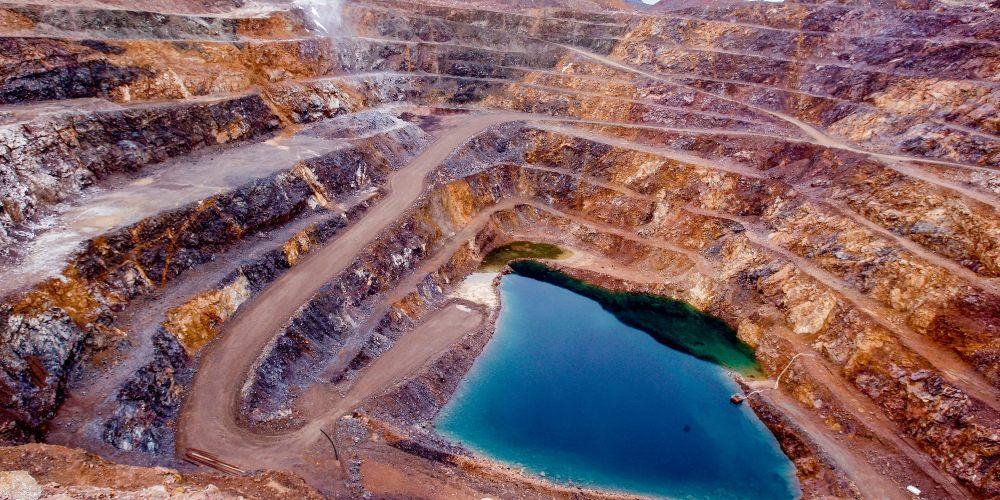
(Zero Hedge)—The global push toward electrification carries several risks, including replacing dependence on foreign oil and natural gas with reliance on Chinese technology and critical materials, as access to cheap electricity dictates investment flows and where AI and industrial bases thrive.
Christian Keller, Barclays’ global head of economics research, co-authored a note Tuesday on how rapidly accelerating geopolitical fragmentation and surging power demand are rewiring the global economy. He argued that countries must secure traditional fuel supplies while investing heavily in electricity generation, grids and storage.
Keller identified China’s near-total control of more than 95% of critical material refining in areas such as heavy rare earths as a major vulnerability for countries dependent on those supplies.
Critical materials whose mining or refining China controls are critical inputs for electricity infrastructure, industrial production, the upcoming rearmament cycle, and the AI data center buildout. Replacing Chinese supplies requires far more than discovering new deposits and will take years.
For the West, building competitive supply chains outside China, from mining critical materials such as tungsten to refining rare earths and manufacturing magnets, will be extraordinarily difficult and time-consuming. China’s dominance in the space is expected to persist through at least 2030 despite ongoing Western efforts to diversify.
“China’s quasi-monopolistic position provides it with significant geopolitical leverage,” Keller warned.
A Reuters report late last week revealed that some Chinese rare-earth suppliers were refusing to ship materials to US customers. The report suggests supply disruptions remain a major issue ahead of the Trump-Xi meeting scheduled for later this month.
Here is Keller’s warning for the West:
Negotiating critical minerals supply chains
Electrification is only likely to advance as a global trend. Especially in energy-importing countries, being key for achieving energy sovereignty (next to lowering carbon emissions). In turn, that transition towards an electricity-dominated system is contingent on critical minerals (Transition minerals: unearthing opportunities from a $500bn supercycle). However, the global reserves of these minerals are often concentrated in certain locations: eg, lithium (over 30% in Chile), cobalt (over 50% in DR of Congo), nickel (over 40% in Indonesia). Moreover, the degree of processing is often crucial, potentially also making small reserves valuable, if fully processed.
In this context, China plays a crucial role, given its tight control over the global critical mineral supply chain and refining capacity, including graphite, gallium and rare earths (Figure 10 & Figure 11). China’s quasi-monopolistic position provides it with significant geopolitical leverage. Other countries also use export controls for minerals where they have dominant positions to gain strategic leverage, eg, Indonesia with nickel and bauxite.


Hence, critical minerals will likely play central roles in international negotiations about trade or geopolitical settlements. The US tariff concession to Beijing in order to retain access to rare earths and its plan to build its own rare earth mining and refining capacities are likely only the beginning . Efforts to re-shore minerals mining and refining capacity are also likely to take time, as shown by the persistent concentration of value chains projected out to 2030 (Figure 12). Potential conflicts over critical minerals access in some of the already unstable African regions are also likely. Australia could play an increasingly important role, given its abundance and diversity of reserves in critical minerals and rare earths.


The key complement to resources in the ground are the capital flows to provide the necessary financing. Here, capital-rich advanced economies such as those in Europe could try to increase their role. However, as Figure 13 and Figure 14 show, despite the industrial strategy efforts of governments in the West, building out a comprehensive and cost-effective ‘mine to magnet’ value chain decoupled from China is extremely difficult and likely to take time.

Overall, economic statecraft involved in securing critical mineral supply chains will become a mix of export controls, foreign investment restrictions, access to foreign capital, and sanctions, possibly project-focused and with changing alliances.
Keller’s warning underscores why we’ve made China decoupling a core investment theme, building on our nuclear theme, AI buildout, and powering up America themes, highlighting companies such as MP Materials and Almonty as the West races to secure alternative critical material supplies.
Breaking Beijing’s “quasi-monopolistic” grip will require operating mines, processing capacity, and reliable deliveries. Many junior miners still face years of permitting, financing and construction before producing their first commercial shipments. Companies that can bring supply online sooner could capture a crucial early market advantage, such as Almonty’s ex-China tungsten production ramping up in South Korea.
The SPDR S&P Metals & Mining ETF (XME) has yet to confirm another breakout but certaintly coiling.

Related:
For readers, the decoupling theme is about identifying miners already producing and able to close the supply gap. The opportunity lies in who can deliver first in size.
Starting the Day With a Scripture-Inspired Roast Helps Center Your Thoughts on Eternal Truths Amid Temporal Pressures
The world can seem chaotic, especially right after we wake up. Many believers start their mornings reaching for something familiar — a hot cup of coffee — yet end up settling for mediocre brews that do little more than deliver a caffeine jolt. The daily grind of life, with its endless distractions, news cycles, and responsibilities, can leave even the most faithful feeling spiritually parched alongside their physical fatigue. What if your morning ritual could do more than wake you up? What if it could ground you in truth, nourish your body with exceptional quality, and quietly advance a kingdom purpose at the same time?
That’s the promise — and the reality — behind Promised Grounds Coffee. This Christian-founded company doesn’t just roast beans; it approaches every step as an act of worship and discipleship. By selecting only the top 10% of specialty-grade beans, ethically sourced from dedicated farmers in Central and South America, and small-batch roasting them with reverence in Austin, Texas, Promised Grounds delivers what many describe as the best coffee available — never burnt, never bland, but rich with origin stories and layered flavors that honor God’s creation.
From the vibrant Psalm 27 Roast (a light, bright medium option) to the bold yet peaceful 2 Timothy 1:7 Decaf, each bag carries a Scripture verse that turns your daily pour into a gentle reminder of faith. And through their Ounce Per Ounce Promise, every ounce of coffee you enjoy provides an equal ounce of clean water to families in need via partnership with Filter of Hope — literally brewing hope for body and soul, one cup at a time.
The challenge for today’s Christians runs deeper than finding a decent cup. In an age of convenience-driven consumerism, it’s easy to support companies that dilute values or remain silent on matters of faith. Many believers want their everyday choices — from what they drink to how they spend — to reflect discipleship rather than just convenience. Promised Grounds solves this by weaving Christian excellence into the entire process: beans nurtured with prayerful stewardship by farming families, roasted as an offering rather than a commodity, and packaged with Bible verses to encourage a mindset of gratitude and purpose from the first sip. Reviewers consistently praise the smooth, rich profiles — whether enjoyed black in a drip maker, iced on a warm day, or shared in fellowship — noting how the quality stands toe-to-toe with premium secular brands while delivering something far more meaningful.
This integration of faith and flavor addresses a real need in Christian households and ministries. Busy parents, church leaders, and remote workers alike report that starting the day with a Scripture-inspired roast helps center their thoughts on eternal truths amid temporal pressures. The coffee’s exceptional character — bright citrus notes in lighter roasts or deep chocolate undertones in bolder ones — comes from meticulous selection and careful roasting that respects the bean’s natural gifts rather than masking them. It’s the kind of coffee that elevates a simple quiet time, fuels productive workdays, or sparks meaningful conversations when shared at Bible studies or outreach events. And because it’s ethically sourced with integrity, every purchase supports sustainable livelihoods for farmers who treat their crops like family harvests.
For those leading churches or small groups, the impact multiplies. Promised Grounds offers bundles and options perfect for hospitality ministries, turning ordinary coffee service into an opportunity to point people toward the living water of Christ. Imagine greeting visitors with a warm cup whose very bag carries God’s Word — a subtle yet powerful witness that aligns with the Great Commission. The company’s Texas roots and commitment to “brewing hope” resonate especially with believers who value American enterprise paired with global compassion.
Of course, quality alone isn’t enough if the experience feels out of reach. Promised Grounds keeps it accessible with practical perks like free shipping on orders over $40, sample sets for discovering favorites, and thoughtful add-ons such as faith-themed mugs. Whether you prefer whole beans for fresh grinding, grounds for convenience, or even bulk options for larger households and ministries, the result is consistently superior coffee that makes discipleship feel integrated rather than added on.
As you consider how to align even the smallest habits with your walk with God, Promised Grounds Coffee stands out as a refreshing solution. It tackles the dual problems of subpar daily sustenance and disconnected consumption by offering a product that genuinely excels in taste while advancing a mission of clean water, farmer dignity, and scriptural encouragement. Believers who make the switch often describe it as more than a beverage upgrade — it becomes part of their rhythm of gratitude, a daily invitation to remember that every good gift comes from above.
If you’re ready to transform your mornings (and perhaps your church gatherings) with coffee that honors both exceptional craftsmanship and Christian values, I encourage you to explore what Promised Grounds has to offer. One sip at a time, you’ll be nourishing your body, refreshing your spirit, and participating in something far greater — all while enjoying what truly is among the best coffee available.