

Central banker Mark Carney is doing that peculiar Canadian thing again — acting tough while exuding weakness. Just before midnight on Friday, the former governor of the Bank of England and King Charles III’s current prime minister in North America announced that trade talks with the United States had collapsed. This was expected, even though the Canadian and American trade delegations had publicly expressed optimism on Wednesday that a mutually beneficial framework for future trade relations was within reach.
The British Empire’s “climate change”-obsessed central banker announced the official start of the U.S.-Canada Trade War on his X account. That’s ironic because the Canadian government considers Elon Musk an enemy, restricts what information Canadian citizens can see on social media platforms, and seeks to tax and regulate all online communication.
Because of the Canadian government’s censorship/propaganda machine, most Canadian citizens have no idea how economically vulnerable their British vassal state really is. Carney’s public memorandum makes it sound as if Canada’s economy is the envy of the world, when it is nothing more than a plaything for Chinese smugglers and European bankers who use the country as an entry point into U.S. markets.
The average Canadian is about to learn how dependent Canada has always been upon the unreciprocated generosity of the United States.
Canada is a weigh station for moving products into the United States. Its value for other nations lies in its uniquely favorable trade agreements with the U.S. Canadian banks and manufacturers act as middlemen for foreign nations skirting American trade laws. For its trade- and money-laundering services, Canada receives a cut of the profits.
China takes advantage of this arrangement by “snow-washing” their goods through Canadian shell corporations and hiding their commercial transactions within Canadian financial institutions. Over the decades, this “Trojan horse” operation — in which American adversaries use Canada as an economic workaround for hollowing out vital American industries — has greatly profited our neighbors up North.
In fact, the leftist-globalists running Canada have been able to generate enough revenue by stamping Chinese products, “Made in Canada,” that they have become emboldened to get on their “global warming” high horse and lecture the United States about the imaginary “climate apocalypse.” Even though the U.S. has actually reduced its so-called “climate emissions” by a larger percentage than Canada over the last twenty-five years (a feat accomplished through industrial innovation), the Canadian government pretends that the country’s poorly managed forest fires are the outcome of U.S. capitalism. (This is akin to blaming Thor for thunder.)
While sitting on some of the largest energy reserves on the entire planet, Canada has insisted upon throttling its own hydrocarbon output in the name of “fighting global warming.” By waging war against its own energy industry, Canada makes itself economically and militarily vulnerable.
It cannot build things anymore. It is not self-sufficient. It depends upon kickbacks from communist China and military protection from the United States. These dual dependencies are mutually exclusive in a world in which China and the U.S. are already engaged in various forms of hybrid warfare.
Britain’s man in Canada, Mark Carney, is globalism personified. As the former governor of the Bank of England, he spoke regularly about a future in which central bankers managed the planet’s resources and economic activity. He has been a lifetime proponent of using the “global warming” bogeyman as a justification for controlling all human behavior.
Carney is afflicted with the same narcissistic disease that grips all of Europe’s political and economic “elites”: He does not believe in the value of free markets, free speech, or human liberty. He is, at heart, a totalitarian committed to the proposition that a small cabal of central bank oligarchs and political aristocrats should exercise complete power over everyone else.
Two centuries ago, the great energy revolution began. Hydrocarbon energies trapped in coal, oil, and natural gas changed the world. Productivity skyrocketed. Industrial innovation skyrocketed. Material wealth, lifespans, and population growth skyrocketed. It seems no coincidence that as these free market innovations exponentially increased the world’s wealth and population, some of the most wealthy and powerful families in Europe and the Americas began to work earnestly on the best ways to arrest both trends.

In different committees and associations formed since the nineteenth century, Western “elites” have strategized how to put the Industrial Revolution back into Pandora’s box. Among their “solutions” to population growth, globalists have fantasized about famine, war, and pestilence while promoting abortion-on-demand, homosexual lifestyles, and the dissolution of families and marriage.
The “global warming” canard has been with us at least since the beginning of the twentieth century, and propagandists posing as “academics,” “journalists,” and other assorted “experts” have put it to great use.
The idea is simple: If people can be scared into believing that so-called “fossil fuels” are leading to Armageddon, then they will consent to government bureaucrats managing all economic transactions. Free markets become entirely controlled markets.
This is the model that exists throughout the world today. That’s why we have central banks that manipulate our currencies and “free trade deals” that micromanage every element of trade. This kind of system limits the economic mobility of the average person while ensuring that wealthy “elites” maintain long-term control over society.
Old Europe prefers this model because it appeals to the aristocratic sensibilities of the noble houses that ran Europe for more than a thousand years. Empowering political and economic “elites” to regulate all economic activity is just a modern form of feudalism and a complete rejection of the wealth-accumulating mechanisms of truly free markets.
This is Mark Carney’s economic model, too. Using Chinese slave labor to build necessary things while taking advantage of complex international banking rules that allow the “right people” to take their economic cut has nothing to do with “free” trade or “free” markets. Carney is a leftist-globalist who craves totalitarian control.
Carney insists that President Trump is acting unreasonably by “[p]utting tariffs on [America’s] closest allies and charging for access to its vast market.” What he doesn’t tell Canadian citizens, though, is that the United States has long allowed European and Canadian businesses to profit from American markets while their governments restrict American producers from reciprocal trade. Through this one-way arrangement, American citizens subsidize Canada and countries across Europe at great personal expense.
Instead of thanking Americans for propping up their economies since WWII, these same “allies” have allowed themselves to become conduits for communist China and multinational investment firms to bleed America dry. The North American Free Trade Agreement started a thirty-year global campaign that has destroyed American industry and manufacturing from coast to coast.
President Trump, Treasury Secretary Bessent, U.S. Trade Representative Greer, and a whole army of other “America First” economic thinkers have decided to end this self-inflicted American decline for good. Canadian and European officials are shocked that their parasitic free rides on the backs of Americans have finally come to an end. Because both feudal jurisdictions embrace propaganda and censorship, they will lie to their citizens and claim that President Trump is breaking all the “rules” and acting “unfairly.”
What they will not say is that their economies are unsustainable without continuing American welfare.
In his midnight missive to the Canadian people, Britain’s prime minister in North America finishes with this thought: “And we will not allow any nation to determine our future. We will set our own course to keep building Canada strong for all.”
Great. That’s exactly what we Americans want — a future in which national sovereignty means something. Good luck, Canada. No hard feelings. And, Alberta, if you ever get tired of being treated as second-class citizens, you’re welcome to join your American friends!
Hat tip to Don MacDonald.
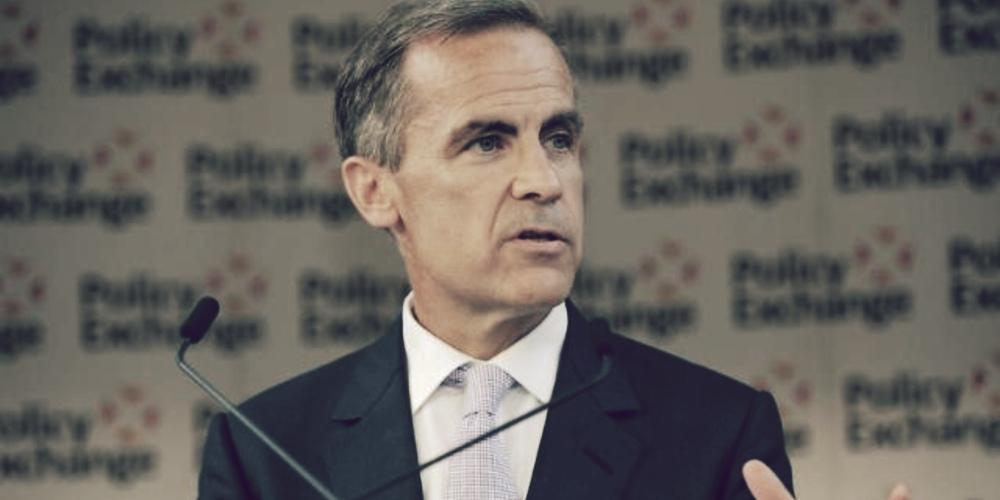
Image: Mark Carney. Credit: Policy Exchange via Flickr, CC BY 2.0
Starting the Day With a Scripture-Inspired Roast Helps Center Your Thoughts on Eternal Truths Amid Temporal Pressures
The world can seem chaotic, especially right after we wake up. Many believers start their mornings reaching for something familiar — a hot cup of coffee — yet end up settling for mediocre brews that do little more than deliver a caffeine jolt. The daily grind of life, with its endless distractions, news cycles, and responsibilities, can leave even the most faithful feeling spiritually parched alongside their physical fatigue. What if your morning ritual could do more than wake you up? What if it could ground you in truth, nourish your body with exceptional quality, and quietly advance a kingdom purpose at the same time?
That’s the promise — and the reality — behind Promised Grounds Coffee. This Christian-founded company doesn’t just roast beans; it approaches every step as an act of worship and discipleship. By selecting only the top 10% of specialty-grade beans, ethically sourced from dedicated farmers in Central and South America, and small-batch roasting them with reverence in Austin, Texas, Promised Grounds delivers what many describe as the best coffee available — never burnt, never bland, but rich with origin stories and layered flavors that honor God’s creation.
From the vibrant Psalm 27 Roast (a light, bright medium option) to the bold yet peaceful 2 Timothy 1:7 Decaf, each bag carries a Scripture verse that turns your daily pour into a gentle reminder of faith. And through their Ounce Per Ounce Promise, every ounce of coffee you enjoy provides an equal ounce of clean water to families in need via partnership with Filter of Hope — literally brewing hope for body and soul, one cup at a time.
The challenge for today’s Christians runs deeper than finding a decent cup. In an age of convenience-driven consumerism, it’s easy to support companies that dilute values or remain silent on matters of faith. Many believers want their everyday choices — from what they drink to how they spend — to reflect discipleship rather than just convenience. Promised Grounds solves this by weaving Christian excellence into the entire process: beans nurtured with prayerful stewardship by farming families, roasted as an offering rather than a commodity, and packaged with Bible verses to encourage a mindset of gratitude and purpose from the first sip. Reviewers consistently praise the smooth, rich profiles — whether enjoyed black in a drip maker, iced on a warm day, or shared in fellowship — noting how the quality stands toe-to-toe with premium secular brands while delivering something far more meaningful.
This integration of faith and flavor addresses a real need in Christian households and ministries. Busy parents, church leaders, and remote workers alike report that starting the day with a Scripture-inspired roast helps center their thoughts on eternal truths amid temporal pressures. The coffee’s exceptional character — bright citrus notes in lighter roasts or deep chocolate undertones in bolder ones — comes from meticulous selection and careful roasting that respects the bean’s natural gifts rather than masking them. It’s the kind of coffee that elevates a simple quiet time, fuels productive workdays, or sparks meaningful conversations when shared at Bible studies or outreach events. And because it’s ethically sourced with integrity, every purchase supports sustainable livelihoods for farmers who treat their crops like family harvests.
For those leading churches or small groups, the impact multiplies. Promised Grounds offers bundles and options perfect for hospitality ministries, turning ordinary coffee service into an opportunity to point people toward the living water of Christ. Imagine greeting visitors with a warm cup whose very bag carries God’s Word — a subtle yet powerful witness that aligns with the Great Commission. The company’s Texas roots and commitment to “brewing hope” resonate especially with believers who value American enterprise paired with global compassion.
Of course, quality alone isn’t enough if the experience feels out of reach. Promised Grounds keeps it accessible with practical perks like free shipping on orders over $40, sample sets for discovering favorites, and thoughtful add-ons such as faith-themed mugs. Whether you prefer whole beans for fresh grinding, grounds for convenience, or even bulk options for larger households and ministries, the result is consistently superior coffee that makes discipleship feel integrated rather than added on.
As you consider how to align even the smallest habits with your walk with God, Promised Grounds Coffee stands out as a refreshing solution. It tackles the dual problems of subpar daily sustenance and disconnected consumption by offering a product that genuinely excels in taste while advancing a mission of clean water, farmer dignity, and scriptural encouragement. Believers who make the switch often describe it as more than a beverage upgrade — it becomes part of their rhythm of gratitude, a daily invitation to remember that every good gift comes from above.
If you’re ready to transform your mornings (and perhaps your church gatherings) with coffee that honors both exceptional craftsmanship and Christian values, I encourage you to explore what Promised Grounds has to offer. One sip at a time, you’ll be nourishing your body, refreshing your spirit, and participating in something far greater — all while enjoying what truly is among the best coffee available.