

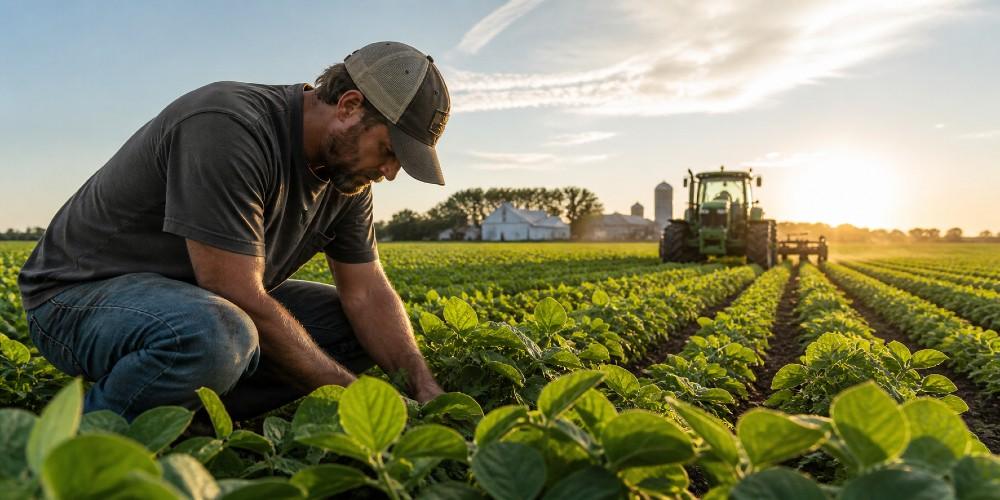
As geopolitical tensions disrupt shipping through the Strait of Hormuz and spike fertilizer prices worldwide, the spring planting season in the Northern Hemisphere faces serious headwinds. Yet while much of the globe confronts potential yield collapses and food shortages, the United States enters this challenge with distinct advantages rooted in domestic energy strength, farmer ingenuity, and policy focus on self-reliance.
This crisis exposes the perils of over-dependence on volatile foreign supply chains, even as it highlights America’s capacity to adapt and lead.
The closure of key routes has blocked roughly one-third of global seaborne fertilizer trade, particularly nitrogen products like urea from the Persian Gulf. Farmers in Europe, Asia, and Africa now scramble during critical application windows, with experts warning of reduced wheat, rice, and coarse grain output that could exceed tens of millions of tons. Impoverished nations will feel the pain first and hardest, as wealthier buyers outbid them in a de facto global auction for scarce nutrients.
American farmers have confronted input volatility before—from the 2022 Ukraine conflict to earlier supply strains—and responded with characteristic pragmatism. Many now optimize applications, rotate toward less nitrogen-intensive crops like soybeans where practical, and leverage precision tools to stretch every ton. While no one welcomes higher costs, the U.S. starts from a position of relative strength. Unlike nations fully exposed to Gulf imports, America produces much of its own nitrogen thanks to the shale revolution that unlocked cheap, reliable natural gas.
Recent federal initiatives under Agriculture Secretary Brooke Rollins amplify this edge. The USDA coordinates across agencies to advance stalled production projects, secure import flexibilities where needed, and invest in expansions that could significantly boost domestic capacity. Facilities in states like Iowa and Indiana, plus larger proposals in Louisiana, signal a serious commitment to fortifying the supply chain at home rather than hoping for distant seas to clear.
This approach stands in sharp contrast to the fragility on display elsewhere. European plants, burdened by high energy costs, have curtailed output for years. Developing regions lack both the feedstock and the infrastructure to pivot quickly.
The result is a slow-motion stress test of globalism’s vulnerabilities: when chokepoints fail, the weakest links break first. America’s farmers, stewards of the world’s most productive farmland, demonstrate once again why prioritizing domestic capacity and energy independence serves not only national interest but global food stability.
Challenges remain real. Diesel prices for machinery have climbed alongside fertilizer, squeezing margins at a time when commodity returns for corn and other staples have lagged. Some producers face tough choices on acreage and inputs. Yet history shows American agriculture innovates under pressure—through better genetics, soil management, and efficiency gains that deliver more from less. The current disruption, while painful, accelerates the shift away from precarious overseas dependencies that past policies too often encouraged.
Critics of robust domestic energy development once dismissed it as unnecessary or environmentally costly. Events in the Strait of Hormuz deliver a pointed rebuttal. Secure borders, open domestic drilling, and streamlined permitting are not abstract principles—they translate directly into fertilizer plants running at capacity and tractors rolling through American fields. The path forward lies in doubling down on these fundamentals rather than returning to reliance on unstable regimes.
As Scripture reminds us in times of uncertainty and provision: “And God is able to make all grace abound toward you; that ye, always having all sufficiency in all things, may abound to every good work” (2 Corinthians 9:8).
This season tests resolve but also reveals the blessings of a nation built on self-reliance, faith, and hard work. American farmers will navigate it, as they have before, feeding their countrymen and contributing to a more secure world.
The ultimate lesson extends beyond one planting cycle. True security in food and inputs demands reducing exposure to foreign flashpoints. By strengthening what lies within our borders—energy, innovation, and agricultural excellence—the United States not only weathers global storms but emerges positioned to lead when others falter.

Starting the Day With a Scripture-Inspired Roast Helps Center Your Thoughts on Eternal Truths Amid Temporal Pressures
The world can seem chaotic, especially right after we wake up. Many believers start their mornings reaching for something familiar — a hot cup of coffee — yet end up settling for mediocre brews that do little more than deliver a caffeine jolt. The daily grind of life, with its endless distractions, news cycles, and responsibilities, can leave even the most faithful feeling spiritually parched alongside their physical fatigue. What if your morning ritual could do more than wake you up? What if it could ground you in truth, nourish your body with exceptional quality, and quietly advance a kingdom purpose at the same time?
That’s the promise — and the reality — behind Promised Grounds Coffee. This Christian-founded company doesn’t just roast beans; it approaches every step as an act of worship and discipleship. By selecting only the top 10% of specialty-grade beans, ethically sourced from dedicated farmers in Central and South America, and small-batch roasting them with reverence in Austin, Texas, Promised Grounds delivers what many describe as the best coffee available — never burnt, never bland, but rich with origin stories and layered flavors that honor God’s creation.
From the vibrant Psalm 27 Roast (a light, bright medium option) to the bold yet peaceful 2 Timothy 1:7 Decaf, each bag carries a Scripture verse that turns your daily pour into a gentle reminder of faith. And through their Ounce Per Ounce Promise, every ounce of coffee you enjoy provides an equal ounce of clean water to families in need via partnership with Filter of Hope — literally brewing hope for body and soul, one cup at a time.
The challenge for today’s Christians runs deeper than finding a decent cup. In an age of convenience-driven consumerism, it’s easy to support companies that dilute values or remain silent on matters of faith. Many believers want their everyday choices — from what they drink to how they spend — to reflect discipleship rather than just convenience. Promised Grounds solves this by weaving Christian excellence into the entire process: beans nurtured with prayerful stewardship by farming families, roasted as an offering rather than a commodity, and packaged with Bible verses to encourage a mindset of gratitude and purpose from the first sip. Reviewers consistently praise the smooth, rich profiles — whether enjoyed black in a drip maker, iced on a warm day, or shared in fellowship — noting how the quality stands toe-to-toe with premium secular brands while delivering something far more meaningful.
This integration of faith and flavor addresses a real need in Christian households and ministries. Busy parents, church leaders, and remote workers alike report that starting the day with a Scripture-inspired roast helps center their thoughts on eternal truths amid temporal pressures. The coffee’s exceptional character — bright citrus notes in lighter roasts or deep chocolate undertones in bolder ones — comes from meticulous selection and careful roasting that respects the bean’s natural gifts rather than masking them. It’s the kind of coffee that elevates a simple quiet time, fuels productive workdays, or sparks meaningful conversations when shared at Bible studies or outreach events. And because it’s ethically sourced with integrity, every purchase supports sustainable livelihoods for farmers who treat their crops like family harvests.
For those leading churches or small groups, the impact multiplies. Promised Grounds offers bundles and options perfect for hospitality ministries, turning ordinary coffee service into an opportunity to point people toward the living water of Christ. Imagine greeting visitors with a warm cup whose very bag carries God’s Word — a subtle yet powerful witness that aligns with the Great Commission. The company’s Texas roots and commitment to “brewing hope” resonate especially with believers who value American enterprise paired with global compassion.
Of course, quality alone isn’t enough if the experience feels out of reach. Promised Grounds keeps it accessible with practical perks like free shipping on orders over $40, sample sets for discovering favorites, and thoughtful add-ons such as faith-themed mugs. Whether you prefer whole beans for fresh grinding, grounds for convenience, or even bulk options for larger households and ministries, the result is consistently superior coffee that makes discipleship feel integrated rather than added on.
As you consider how to align even the smallest habits with your walk with God, Promised Grounds Coffee stands out as a refreshing solution. It tackles the dual problems of subpar daily sustenance and disconnected consumption by offering a product that genuinely excels in taste while advancing a mission of clean water, farmer dignity, and scriptural encouragement. Believers who make the switch often describe it as more than a beverage upgrade — it becomes part of their rhythm of gratitude, a daily invitation to remember that every good gift comes from above.
If you’re ready to transform your mornings (and perhaps your church gatherings) with coffee that honors both exceptional craftsmanship and Christian values, I encourage you to explore what Promised Grounds has to offer. One sip at a time, you’ll be nourishing your body, refreshing your spirit, and participating in something far greater — all while enjoying what truly is among the best coffee available.