

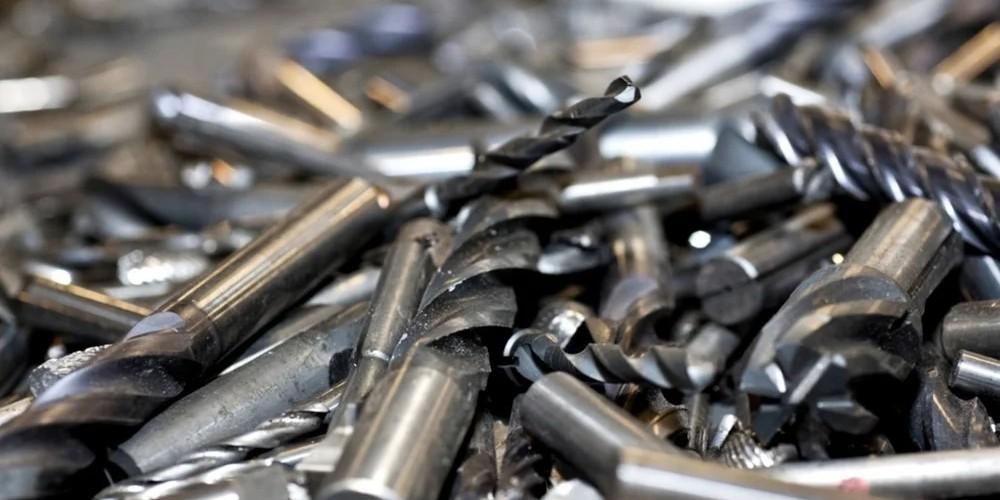
(Zero Hedge)—At the end of last week, the Trump administration’s halt to tungsten scrap exports took effect, as the U.S. and its allies confront a deepening supply crisis and race to find new supplies.
China’s export restrictions are accelerating the West’s campaign to secure ex-China supplies, reinforcing our U.S.-China decoupling theme and placing a major spotlight on the largest Western tungsten miner: Almonty Industries.
The miner operates in Portugal and is ramping up its prized Sangdong Mine in South Korea, which is expected to account for roughly 40% of Western tungsten production once it reaches full capacity.
To understand the global tungsten crisis, readers must first remember the metal’s critical importance to the modern economy.
Tungsten is essential to defense systems, industrial tooling, semiconductors, automobiles, energy infrastructure, electronics, artificial intelligence, and the power-grid buildout. Put simply, it is one of the building blocks of the industrial economy, yet its supply chain remains fractured and heavily exposed to China.

Almonty CEO Lewis Black’s latest snapshot of the global tungsten market, the severity of the supply crisis, and the West’s race to secure ex-China supplies deserves close attention.
Almonty is emerging as the leading pure-play Western tungsten miner and a critical supplier capable of helping break Beijing’s grip on the market.
Here is CEO Black’s assessment:
Everyone keeps asking me when the tungsten price falls back. I understand the instinct, but it’s a distraction from the thing that matters: what happens when a metal you can’t do without becomes hard to buy. The last two weeks gave a few answers to that.
JD’s manually curated links for God-fearing MAGA patriots
As of last week, no American can export tungsten scrap without a license. All of it – 100 percent – stays home, at least for the next year.
The plants that turn that scrap into something useful are already sitting in the United States, most of them European or Japanese owned. We collect it here, process it here, and the midstream product goes on to Europe. That cycle carries on exactly as before, and the country is in no danger of drowning in a pile of metal it can’t handle.
So why the rule, with all its talk of national defense? Because a handful of American operators had found a tidier deal: sell the scrap straight to China at a premium – the very country the rule is built to shut out. That’s the door Washington just shut. Who said patriotism was dead?
Those businesses know who they are. And so do we.

Tungsten markets
Michael Dornhofer, ISBP – assessment as of 28 August, 2026
For the situation on the tungsten market, a Chinese associate, with whom I spoke this week, found the right words, “off-season sleep”. So, prices in China and in the west are stable. APT CIF Rotterdam/Baltimore is still around 3000 USD/mtu WO3 for APT; concentrate prices are between 2400 and 2600. Anyhow, while some downstream customers hope (or should I say dream) that prices might drop soon, other stakeholders see a persisting supply problem in all western countries.

Why can one see the situation so differently? It is a fact that tungsten prices in China are now significantly below western prices, and it is widely understood that China had set the world market price for several decades. What’s different now is that since February 2025, for each individual export of intermediates, the Chinese Ministry of Commerce has to grant an export license. And as they are very restrictive (only 28 t APT could be exported in first half 2026!) there is now a firewall between Chinese domestic market and rest of the world.
Everyone understands that, as China stood for 80 per cent of the tungsten world market, without APT/Oxide from China, there is a shortage on tungsten raw material in the west. And if there is not enough tungsten raw material, coming from new sources, there is no logic argument that prices should drop significantly.
Of course, after the tungsten price went up eightfold in just over one year, there can always be a technical correction, but in principle, prices cannot go back, even close to levels, seen previously.
Michael Dornhofer is founder of ISBP (Independent Supply Business Partner) in Graz, Austria. He has spent more than 20 years in tungsten, including 13 years at Wolfram Bergbau und Hütten, Sandvik’s tungsten business, and has worked as an independent agent and consultant to the tungsten and hard metal industry since 2019.
The buyback, and the thinking behind it
Last week the board approved buying back up to $300m of our own shares – about five percent of the company – over three years.
It comes out of Sangdong’s earnings, spread across those three years, so the balance sheet stays intact. The convertible we priced in June dilutes existing shareholders by a little over 7 percent if it converts. Buy back 5 percent, and most of that dilution goes away. We priced the convert with the stock around $21, so anywhere below that, buying our own stock is the smartest money we can spend.
Yes, it can look like money in one door and out the other. But it comes in from the mine and goes back to the people who own the mine. That’s where it belongs.
The alternative was buying a boat. An institutional shareholder asked what I’d do with the cash; I admitted I’d been eyeing up a superyacht. He asked if he could use it. Two weeks a year, I said. He wanted to know whether the SEC would allow it. Nobody’s tested that, as far as I know – but the upkeep would have ruined me anyway. So my dream of a floating company vehicle will have to wait. (Edit from David Hanick – Almonty’s in-house counsel: Please note that this is said in jest. Mr Black is most definitely not buying a superyacht.)
Down on volume, up on margin
Panasqueira’s output dropped this quarter, and that was the plan. When the tungsten price is this high, we go after the low-grade ore – the material we’d ignore in a normal market because it wouldn’t pay. High prices make it pay. So we mine it and bank the margin, and the good grades stay in the ground for another day. Fewer tonnes come out of the mine. More money goes in the till. And because we’re taking ore we’d otherwise have left alone, the reserve lasts longer.
That’s the difference between an operator and a junior sitting on someone else’s money. A junior takes what the market gives it. An operator decides what to mine and when. The number that matters came in at a little over 60 percent – gross margin for the quarter. On a 136-year-old mine, running a fifth of the grade we have waiting in Korea. Show me another mine that does that.
What I’m reading
The auto industry’s China crisis
Honda’s chief executive Toshihiro Mibe went to China to see how its carmakers build so fast, and left rattled. New models there take under two years – half the time Honda needs. Xiaomi, a phone maker that started building cars two years ago, has swapped the assembly line for robots and single-piece castings and turns out a thousand cars a day. Honda’s own sales in China have gone from 1.6mn in 2020 to 640,000. “We have no chance against this,” said Mibe. His answer: pull thousands of engineers into a revived R&D arm and hope they can close the gap. Being the giant counts for nothing when someone hungrier builds faster.
For when the screen goes dark
Europe pays for everything by phone now, and yet weirdly the value of banknotes in circulation keeps climbing. Cash is vanishing from the checkout and piling up in drawers and safes instead. When a blackout knocked out power across Spain and Portugal last year and the card terminals died, the only money that still worked was the paper kind. The European Central Bank has drawn the obvious lesson and now treats cash as resilience – the backup for the day the network falls over. Or the zombie apocalypse finally comes.
Buying from yourself
Nvidia is putting up to $105bn behind a new data center for OpenAI – which OpenAI will then fill with Nvidia’s own chips. Money goes out as investment and comes back as revenue. The market calls it circular financing, and it’s nervous about it. The figure started at a reported $250bn and shrank to $105bn once investors saw the shape of it. Nvidia’s boss insists it’s nothing of the sort, and that OpenAI will pay its own way. Maybe. But if the customer needs the chipmaker to fund the purchase, you have to ask whether it can stand on its own.
Opinion
Everyone forecasts the West staying short of tungsten for years. On the face of it, that’s everything a producer like me could want: high prices, customers with nowhere else to go. For the most part, it is. But it also comes with challenges.
Most shortages destroy demand through price. Something gets too expensive, so people use less or design it out. Tungsten doesn’t work that way. You use so little in any finished product, whether a cutting tool, a gearbox or a semiconductor, that the price could double and nobody would stop building the thing.
What kills tungsten demand is absence. When a manufacturer can’t get the material at all, the line stops and the product goes unbuilt, and a shuttered plant rarely reopens. And you can’t engineer around it: in the work tungsten does, nothing else has the hardness or takes the heat. So a shortage suits me right until it starts shutting Western factories for want of material. I’m better off with more tungsten reaching those factories, not less – even if it comes from my rivals. A starved supply chain loses the demand I depend on.
In the media
Hot again, apparently. The Wall Street Journal ran the numbers this week under the headline “Tungsten Stocks Are Hot (Again),” with us on track for our best month in over a year. What I liked was the “again” – the paper remembers when tungsten was a curiosity, a metal people bought in little cubes for the novelty of the weight.
The retail crowd is paying attention too. Michael Sikand – an investor with a good nose for these things – put out a long interview the two of us did. His three-line version for his audience: no AI chips and no missiles without tungsten, the price up roughly sevenfold since China pulled back, and Sangdong capable of around 40 percent of the world’s non-China supply. Not a bad summary of a story that took me a decade to build.
A defense take on the shortage. National Security News set out why Western militaries are exposed on tungsten: 30 years with barely any US production, and a Pentagon rule that from January turns away Chinese-origin metal. They quoted me saying what I’ve said for years – America walked away from tungsten and left China to it.
A television crew went down Sangdong. Korean broadcast news took its cameras underground – blasting in the dark, tungsten glowing blue under UV light, 4.7 kilometers of tunnels – and came up with the same conclusion we keep making: a mine the West wrote off 30 years ago is now one of the few places outside China that can actually supply the metal, with most of its output already spoken for by the United States.
Watch Here: Sangdong At Center Of Western Race To Secure Tungsten
Two Storms, One Harvest

Every food crisis in living memory has been a one-shock event. The 2008 price spike was a commodity bubble. The 2020 shortages were a logistics failure. The 2022 grain scare was a war on one exporter’s ports. Each time, the system bent, adjusted, and recovered, and each time the experts assured us afterward that global markets are simply too big and too diversified to fail.
What nobody in Washington seems eager to discuss is that 2026 is shaping up to be something the modern food system has never actually faced. Two independent shocks, one climatic and one geopolitical, are converging on the same harvest cycle at the same time. Not sequentially. Simultaneously.
Start with the weather. The Pacific Ocean is currently building toward what forecasters now openly call a record event. NOAA’s Climate Prediction Center puts the odds of at least a strong El Niño near 88 percent, with roughly two in three odds it reaches “very strong” status, the tier reserved for perhaps three or four events in the entire satellite era. Every major global model now projects a median peak in Super El Niño territory, and most of them project it exceeding the 2015-16 event, which until now held the modern record. Sea surface anomalies were already brushing the super threshold in mid-July, months before these events normally peak. The atmosphere has already shifted into El Niño mode, and the event is forecast to crest in late fall and early winter.
This is not about “climate change.” It’s about the standard cycles of weather, and the cycle we’re currently in is one that has likely devastated societies in the past. We’re better prepared as a society today, but not all Americans are equally prepared.
Serious households have started doing the quiet math on their own. Grocery bills tell part of the story, and the forecast maps tell the rest, which is why long-term food storage has moved from fringe hobby to mainstream line item in the family budget, with established suppliers like Heaven’s Harvest seeing demand from people who five years ago would have rolled their eyes at the idea. That instinct is not paranoia. It is pattern recognition, and the pattern is worth walking through carefully.
Editor’s Note: Heaven’s Harvest IS a sponsor, but the warnings of this article are real and would be written even if we didn’t have a survival food sponsor. With that said, those who take advantage of what they offer can use promo code “Patriot” for 15% off.
The Fertilizer Clock Is Already Running
While the Pacific warms, the second shock has been unfolding in the Strait of Hormuz. The conflict with Iran turned the world’s most important energy chokepoint into a contested waterway, and the consequences reach far beyond the gas pump. Roughly a third of global fertilizer trade moves through Hormuz, and the disruption sent urea prices up 86 percent year over year by March, with a 53 percent jump in a single month.
The World Bank projects energy prices rising about 24 percent in 2026 and fertilizer about 31 percent. By its own accounting, fertilizer prices ran 35 percent higher in the first five months of this year than the same period last year.
Here is the mechanism the nightly news will not explain. Fertilizer is not a grocery item. It is a time-delayed input. The nitrogen a farmer in Iowa or Punjab could not afford to apply this spring does not show up as a problem this spring. It shows up as a thinner harvest six to twelve months later.
The World Bank’s own food security brief concedes that the effects of reduced applications earlier this season “are likely to become visible only later in harvest outcomes.” Translate that from institutional language into plain English and it means this. The damage is already done, it is already in the ground, and we are simply waiting for it to arrive on the shelf.
Now check the calendar. Six to twelve months from the spring planting season lands us squarely in late 2026 and early 2027. Which is precisely when the strongest El Niño in the instrumental record is forecast to peak, bringing its signature droughts to Southeast Asia, Australia, southern Africa, northern Brazil, and South Asia, the very regions that grow the world’s rice, sugar, and oilseeds.
The World Bank warns openly that a strong El Niño “could disrupt multiple crop belts simultaneously” on top of the conflict-driven input costs. Their baseline projection assumes the Middle East disruptions ease by autumn. What in the last two years of Middle East history suggests that assumption is safe?
The System Has No Slack Left
The comfortable answer is that global markets always adjust. But adjustment requires slack, and the slack is gone. Global cereal production is expected to decline from last year’s records even before El Niño does its work. The UN World Food Programme, hardly a den of right-wing preppers, is calling this the most significant disruption to its supply chains since Covid and the invasion of Ukraine, and its supply chain director put the stakes bluntly.
Today’s supply chain challenges are tomorrow’s hunger crisis.
There is also a political dimension that markets cannot price. When food gets scarce, governments do not behave like economists. They behave like politicians. Export bans, hoarding mandates, and panic buying at the national level turned the modest rice shortfall of 2008 into a global crisis, and analysts are already warning that import-dependent nations are the first dominoes.
The 2015-16 Super El Niño, a far weaker event than what is now forecast, threw tens of millions into food stress across Africa and Asia. This one is projected to be stronger, and it arrives with fertilizer already rationed by price and shipping lanes already contested by missiles.
What Joseph Knew
Scripture does not treat preparation for lean years as faithlessness. It treats it as wisdom delivered in advance to those willing to act on it.
Behold, there come seven years of great plenty throughout all the land of Egypt: And there shall arise after them seven years of famine; and all the plenty shall be forgotten in the land of Egypt.
Joseph did not respond to that warning with a hashtag or a committee. He stored grain during the years of abundance, and when the famine came, Egypt stood while its neighbors begged. The lesson is not that famine is certain. It is that the time to prepare is precisely when preparation still looks optional.
Nobody who filled a pantry in a year of plenty has ever regretted it, and nobody standing in an empty aisle has ever been glad he waited for certainty.
None of this calls for panic, and panic is the enemy of sound judgment anyway. It calls for the same unglamorous prudence our grandparents considered ordinary. Keep some cash margin, know your local growers, and put real food in deep storage while it is cheap and available, because the entire arc of this story is that cheap and available is a closing window.
Families looking for a straightforward place to start can visit Heaven’s Harvest and use promo code Patriot for 15 percent off long-term storable food. The forecasts may yet soften, the strait may yet reopen, and we should pray they do. But hope is a fine thing to hold and a foolish thing to eat.