

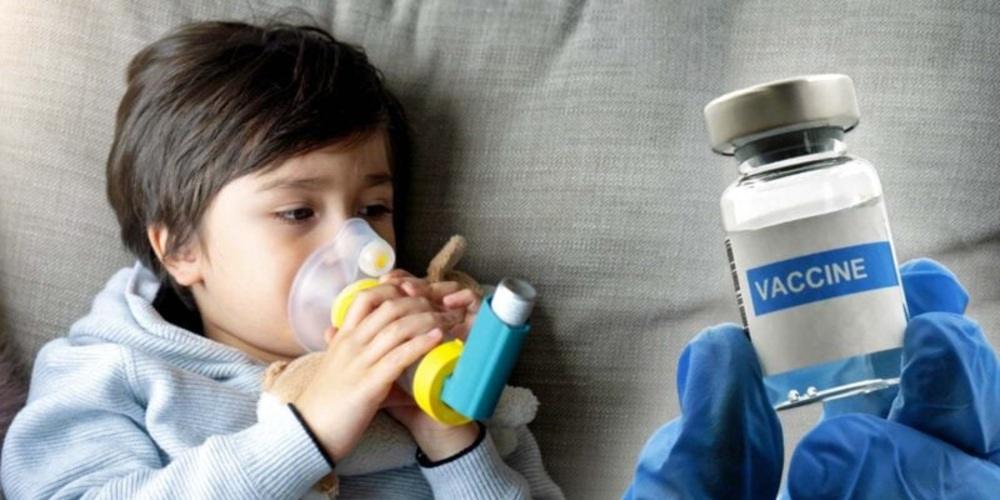
A new study of more than 14,000 children enrolled in Florida Medicaid found links between childhood vaccinations and higher rates of health issues including asthma, autism, attention-deficit hyperactivity disorder (ADHD) and respiratory infections.
The study, written by independent researcher Josh Mittledorf and Children’s Health Defense Chief Scientific Officer Brian Hooker and published in the peer-reviewed Journal of Independent Medicine, analyzed medical records from 1990 to 2010 for 14,235 children whose health histories were available from birth through age 10.
They found that children with the highest recorded number of vaccinations were more than twice as likely to be diagnosed with asthma, autism and ADHD as children with no documented vaccinations.
Autism was linked to combinations of hepatitis B (Hep B) and measles-mumps-rubella (MMR) shots. Developmental delays correlated with the MMR/Hep B combination, the number of flu shots and the total number of recorded vaccinations.
The flu vaccine demonstrated some of the strongest associations with adverse health outcomes. Children who got the flu shot had approximately four times the rates of asthma and three times the rate of autism as other children.
“The message is that the childhood vaccination schedule must be evaluated as a whole,” the authors concluded. “The aggregate burden on the immune system of many vaccine challenges during the few years when the immune system is not yet fully mature appears to be broadly damaging to health.”
What the Florida Medicaid records showed
The Florida Medicaid database contains records for more than 10 million patients. Of the 14,235 children studied, 9,703 had at least one documented vaccination, while 4,532 had no vaccinations.
The researchers examined associations between vaccination status and diagnoses of autism, developmental delay, ADHD, asthma, respiratory infections, ear infections, skin rashes, streptococcal infections and fever.

In total, 4,360 had an asthma diagnosis, 2,267 had ADHD, 4,411 had developmental delays and 152 had autism.
Children with no recorded vaccinations had a 21% annual probability of receiving medical attention for a respiratory infection, compared with 47% in the highest vaccination category.
The total number of diagnoses increased with the number of recorded vaccine doses, the study showed.
The flu, MMR, and combined diphtheria-tetanus vaccines were associated with the worst outcomes.

DTP-Hib (Haemophilus influenzae type b), HPV and pneumococcal vaccines were associated with the least detrimental outcomes.
The researchers also identified associations between flu shots and developmental delays, respiratory infections and other conditions. Several diagnoses increased with the number of recorded flu vaccinations.
The authors acknowledged that the study could not establish causation and confounding factors may influence outcomes.
For example, children with asthma may be more likely to receive flu vaccines because of their existing condition. Because the records were analyzed by year rather than exact dates, researchers could not determine whether vaccination preceded diagnosis in every case.
Mittledorf told The Defender the analysis used the most complete Medicaid data available, but some of the data may be incomplete because children can access health services elsewhere.
The authors also noted that at the time the data were collected, autism and ADHD diagnoses were likely undercounted and the childhood vaccine schedule was roughly half its current size.
The database also contains no information about other variables that shape pediatric outcomes, such as gestational age and maternal health.
“The data we had were from one special set of children, and the information was incomplete,” Mittledorf said. “So we did the most conservative thing. We analyzed the data in a way that we could say with confidence, ‘the correlations are at least this strong at a minimum.’ So there’s a good chance the situation is worse than what we reported.”
They said their findings were “suggestive, not definitive” and indicate the need for rigorous testing in larger, more complete datasets with better data for individual variables.
Accounting for differences in medical care given
According to the researchers, the greatest potential for bias is that families who vaccinate may be more likely to seek medical care — this is known as the “healthy vaccinee effect.”
Those children may therefore have more opportunities to be diagnosed, which could create the appearance of higher disease rates.
To account for this, the researchers grouped children by their number of annual well-child visits and compared vaccination status and diagnoses within each group.
They also found evidence of protective effects. Hepatitis A and flu vaccinations were associated with fewer ear infection diagnoses, while Hib vaccination was associated with fewer ADHD diagnoses.
They urged caution in interpreting these findings, which they said may also be linked to the healthy vaccinee effect.
Authors call for better data access
The authors anticipated that those who support the current vaccine status quo would dismiss their paper for its limitations. Instead, they argued, the appropriate response would be “to insist that the data necessary to overcome those limitations be made available to the independent scientific community without gatekeeping by agencies with vested interests in the status quo.”
They called on state Medicaid agencies, insurance companies and health maintenance organizations to make de-identified medical records available to independent researchers.
Those datasets, they said, could allow investigators to reproduce the Florida analysis, account for additional confounding factors and examine health outcomes across larger populations.
They wrote:
“The status quo is (potentially) bad for child patients, and their parents, who have no organized representation. But it is also (potentially) bad for health insurance companies and HMOs, which are not only paying the cost of vaccinations that have questionable value; they are also paying for the downstream treatment of diseases whose prevalence is increased by the vaccination schedule. …
“… The take-home message is that those empowered to form public health policy have an urgent need to review all vaccines for safety, using better data than is available from legacy Florida Medicaid datasets.”
Starting the Day With a Scripture-Inspired Roast Helps Center Your Thoughts on Eternal Truths Amid Temporal Pressures
The world can seem chaotic, especially right after we wake up. Many believers start their mornings reaching for something familiar — a hot cup of coffee — yet end up settling for mediocre brews that do little more than deliver a caffeine jolt. The daily grind of life, with its endless distractions, news cycles, and responsibilities, can leave even the most faithful feeling spiritually parched alongside their physical fatigue. What if your morning ritual could do more than wake you up? What if it could ground you in truth, nourish your body with exceptional quality, and quietly advance a kingdom purpose at the same time?
That’s the promise — and the reality — behind Promised Grounds Coffee. This Christian-founded company doesn’t just roast beans; it approaches every step as an act of worship and discipleship. By selecting only the top 10% of specialty-grade beans, ethically sourced from dedicated farmers in Central and South America, and small-batch roasting them with reverence in Austin, Texas, Promised Grounds delivers what many describe as the best coffee available — never burnt, never bland, but rich with origin stories and layered flavors that honor God’s creation.
From the vibrant Psalm 27 Roast (a light, bright medium option) to the bold yet peaceful 2 Timothy 1:7 Decaf, each bag carries a Scripture verse that turns your daily pour into a gentle reminder of faith. And through their Ounce Per Ounce Promise, every ounce of coffee you enjoy provides an equal ounce of clean water to families in need via partnership with Filter of Hope — literally brewing hope for body and soul, one cup at a time.
The challenge for today’s Christians runs deeper than finding a decent cup. In an age of convenience-driven consumerism, it’s easy to support companies that dilute values or remain silent on matters of faith. Many believers want their everyday choices — from what they drink to how they spend — to reflect discipleship rather than just convenience. Promised Grounds solves this by weaving Christian excellence into the entire process: beans nurtured with prayerful stewardship by farming families, roasted as an offering rather than a commodity, and packaged with Bible verses to encourage a mindset of gratitude and purpose from the first sip. Reviewers consistently praise the smooth, rich profiles — whether enjoyed black in a drip maker, iced on a warm day, or shared in fellowship — noting how the quality stands toe-to-toe with premium secular brands while delivering something far more meaningful.
This integration of faith and flavor addresses a real need in Christian households and ministries. Busy parents, church leaders, and remote workers alike report that starting the day with a Scripture-inspired roast helps center their thoughts on eternal truths amid temporal pressures. The coffee’s exceptional character — bright citrus notes in lighter roasts or deep chocolate undertones in bolder ones — comes from meticulous selection and careful roasting that respects the bean’s natural gifts rather than masking them. It’s the kind of coffee that elevates a simple quiet time, fuels productive workdays, or sparks meaningful conversations when shared at Bible studies or outreach events. And because it’s ethically sourced with integrity, every purchase supports sustainable livelihoods for farmers who treat their crops like family harvests.
For those leading churches or small groups, the impact multiplies. Promised Grounds offers bundles and options perfect for hospitality ministries, turning ordinary coffee service into an opportunity to point people toward the living water of Christ. Imagine greeting visitors with a warm cup whose very bag carries God’s Word — a subtle yet powerful witness that aligns with the Great Commission. The company’s Texas roots and commitment to “brewing hope” resonate especially with believers who value American enterprise paired with global compassion.
Of course, quality alone isn’t enough if the experience feels out of reach. Promised Grounds keeps it accessible with practical perks like free shipping on orders over $40, sample sets for discovering favorites, and thoughtful add-ons such as faith-themed mugs. Whether you prefer whole beans for fresh grinding, grounds for convenience, or even bulk options for larger households and ministries, the result is consistently superior coffee that makes discipleship feel integrated rather than added on.
As you consider how to align even the smallest habits with your walk with God, Promised Grounds Coffee stands out as a refreshing solution. It tackles the dual problems of subpar daily sustenance and disconnected consumption by offering a product that genuinely excels in taste while advancing a mission of clean water, farmer dignity, and scriptural encouragement. Believers who make the switch often describe it as more than a beverage upgrade — it becomes part of their rhythm of gratitude, a daily invitation to remember that every good gift comes from above.
If you’re ready to transform your mornings (and perhaps your church gatherings) with coffee that honors both exceptional craftsmanship and Christian values, I encourage you to explore what Promised Grounds has to offer. One sip at a time, you’ll be nourishing your body, refreshing your spirit, and participating in something far greater — all while enjoying what truly is among the best coffee available.